
Wool Mulch, Felt Rolls and Garden Pellets from WoolGrown Company
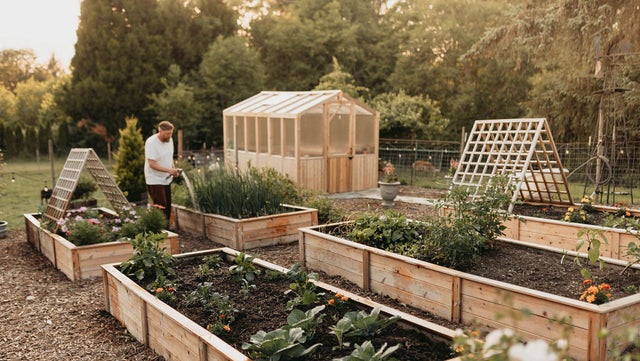
There are three ways to put wool on a garden here, and picking one is mostly a question of what you are covering. Flat felt mats go over rows, planters and the soil around a tree. Long felt rolls, all cut 2.5 feet wide, line the beds of Eartheasy's cedar Complete Raised Garden Bed Kits so nothing needs measuring. Pellets get mixed down into soil or potting mix. That is the whole WoolGrown Company range on this page — no liquid feeds, no compost, no seed — and it suits gardeners who want a mulch that feeds the bed while it works. Everything shares one spec sheet: 100% Canadian wool, manufactured in Canada, EcoCert certified organic.
Felt mats for rows, beds and tree bases
The mats are 3 mm thick. A layer of that over soil blocks the light weed seeds need to get going, shades the surface so less water evaporates, and holds root-zone temperature steadier through heat and cold snaps. Wool absorbs moisture and gives it back slowly, which stretches the gap between waterings, and the texture discourages slugs and snails from crossing it.
Sizes split by shape. The 3' x 6' mat is the broad one — beds, planters, the circle around a trunk. The 1' x 10' strip is built for rows: garlic, onions, salad greens, herbs. It comes plain, or with 2.5" planting holes already cut, hole edges about 2 1/4" apart and circles 3.5" apart diagonally, so seedlings go straight in.
Plan on at least one to two seasons from a mat. Where you land in that range depends on rainfall, how often you water, and how busy the worms and microbes in your soil are.
Rolls cut for the cedar bed kits
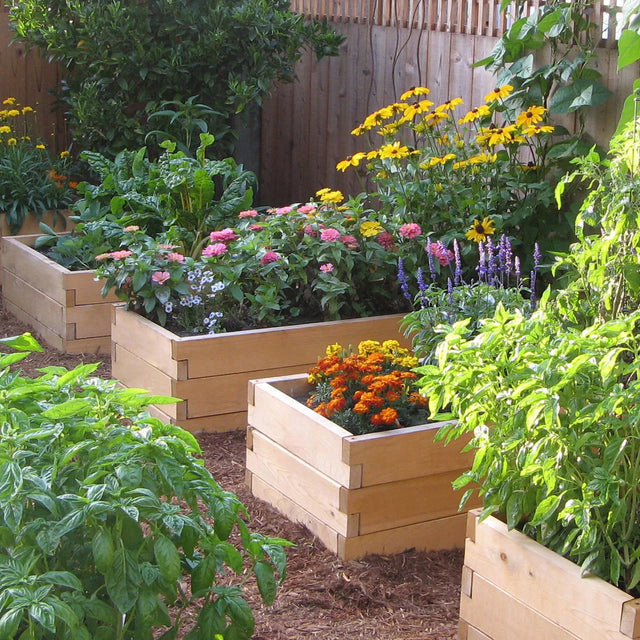
If you already own one of Eartheasy's cedar Complete Raised Garden Bed Kits, the felt comes pre-cut to length: 20 feet for the 8' x 8' kit, 28 feet for the 8' x 12', 35 feet for the 8' x 16'. All three are 2.5 feet wide, so length is the only variable — in coverage and in cost alike. Match it to your kit and the measuring is already done.
Pellets that go into the soil, not over it
Same wool, pelletized, for the jobs a surface cover cannot do — potting mix, an established bed you do not want to smother, the hole under a new tree. The pellets hold up to 30 times their weight in water and release it gradually, keeping soil damp longer between waterings, and as they break down they feed soil microbes, improve soil structure and moderate soil temperature. WoolGrown lists them as generally a 9-0-2 fertilizer: strong on nitrogen, none on phosphorus, a little potassium.
Application rates: 1 lb per 10-20 sq ft worked into the top 2-4" of a vegetable bed, which puts a 5 lb bag at 50-100 sq ft for a season. Half a cup of pellets per 4 cups of potting mix. 2-4 oz top-dressed around a plant. Half a cup to a cup in the planting hole of a new tree or shrub. 5-10% by volume in seed-starting mixes. Once or twice a season is enough, with benefits running 6-12 months.
Two bag sizes cover that: the 5 lb for containers and a small garden, the 10 lb for a home garden. Both ship in a flexible recyclable pouch stitched with cotton thread.
What you give up, and what you get back
Wool is a consumable, not a permanent barrier — worth being clear about before you line a whole raised bed with it. Plastic landscape fabric will outlast it and then shred into pieces you have to dig out. Wool disappears on purpose, enriching the bed with nitrogen, potassium and other nutrients as it goes, which is the same slow-release effect the pellets are sold for. Colour and texture vary a little between rolls and between bags; that is how a natural fibre comes, not a defect.