
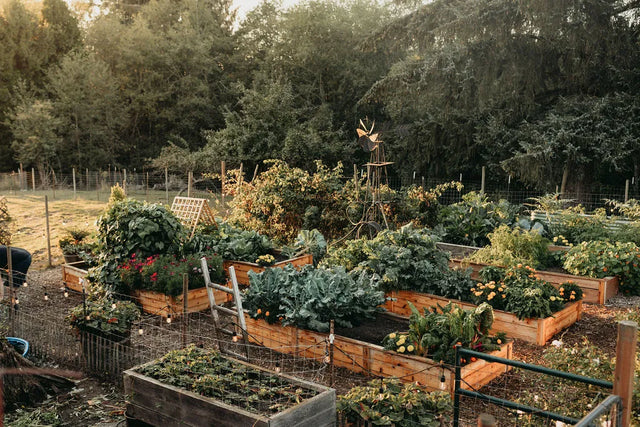


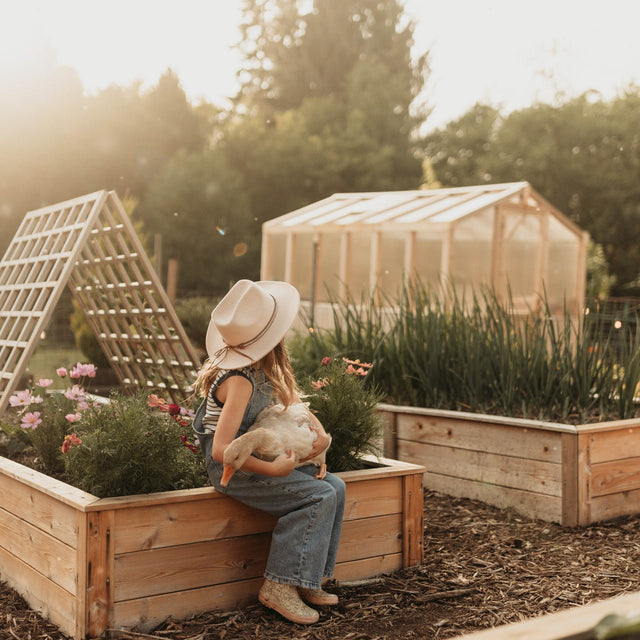
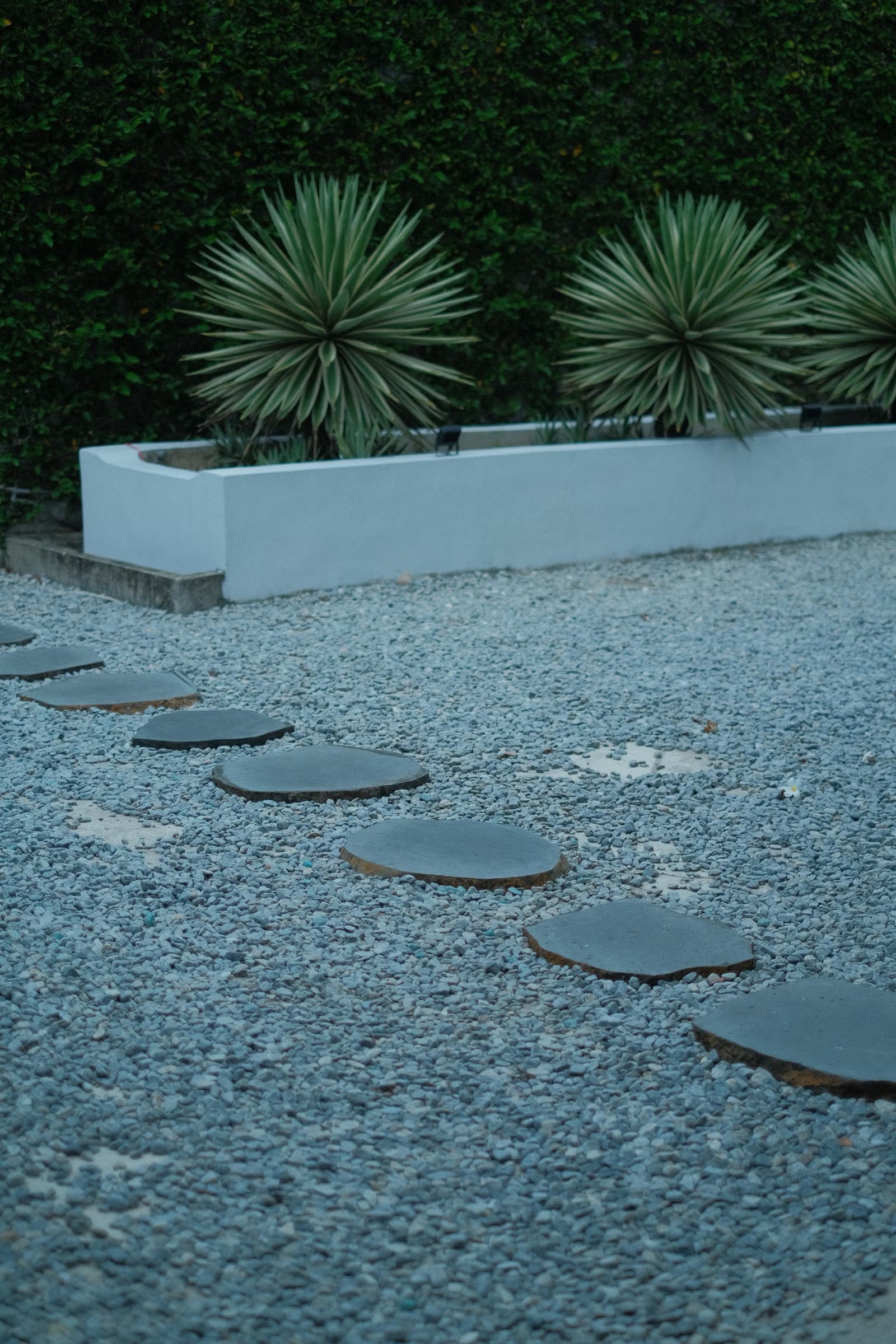
How much gravel do I actually need? This gravel calculator does the math for you. Enter the shape, size and depth of your path, patio, planter base, drainage bed, or shed and greenhouse pad and it returns the volume in cubic yards and cubic feet - plus weight in tons, bag count and estimated cost - so you order the right amount with no leftover pile hardening in the yard.
1. Select the shape
2. Enter the measurements
3. Options
Estimate cost & bags (optional)
Please enter your area dimensions and depth.
How much gravel do I need?
To work out how much gravel you need, measure the area you want to cover, choose a depth, then multiply the two to get a volume - and convert that volume into cubic yards, tons or bags so you can order the right amount. The calculator above does this instantly; here is the exact formula it runs:
cubic yards = (length ft × width ft × depth ft) ÷ 27 tons = cubic yards × material density- Find the area in square feet - length × width for a rectangle, or π × radius² for a circle.
- Multiply by depth in feet (inches ÷ 12 = feet) to get cubic feet.
- Divide by 27 to convert cubic feet into cubic yards, the unit gravel is sold by in bulk.
- Multiply by density to get the weight in tons for delivery.
How to use this gravel calculator
- Choose your area shape - rectangle, circle, or enter a known area directly. For an irregular space, split it into rectangles and add the results.
- Enter your measurements and pick the units (feet, inches or yards).
- Set the depth - tap a preset (2" paths, 3" drainage, 4" patio, shed & greenhouse bases) or type your own.
- Select your material so the weight uses the correct density.
- Optionally add a price to estimate cost, or a bag size to get a bag count.
Gravel coverage by depth
One cubic yard of gravel covers a different area depending on how deep you spread it. Use this as a quick sanity check:
| Depth | Coverage per cubic yard | Coverage per ton* |
|---|---|---|
| 1 inch | ~324 sq ft | ~230 sq ft |
| 2 inches | ~162 sq ft | ~115 sq ft |
| 3 inches | ~108 sq ft | ~77 sq ft |
| 4 inches | ~81 sq ft | ~58 sq ft |
| 6 inches | ~54 sq ft | ~38 sq ft |
Recommended gravel depth by project
| Project | Depth | Notes |
|---|---|---|
| Garden path / walkway | 2-3" | Lay over landscape fabric to block weeds and stop sinking |
| Pea gravel patio | 2-3" top layer | Add a 2" compacted crushed-stone base underneath for stability |
| Shed or greenhouse base | 4-6" | Compacted crushed stone #57 extending ~12" beyond the walls - level the ground first |
| Raised-bed drainage layer | 2-3" | Crushed stone #57 below the soil mix improves drainage |
| French drain / trench | fill the trench | Wrap with fabric and use angular #57 stone, not rounded pea gravel |
| Decorative ground cover | 2" | River rock or lava rock as mulch around beds |
Gravel base for sheds and greenhouses
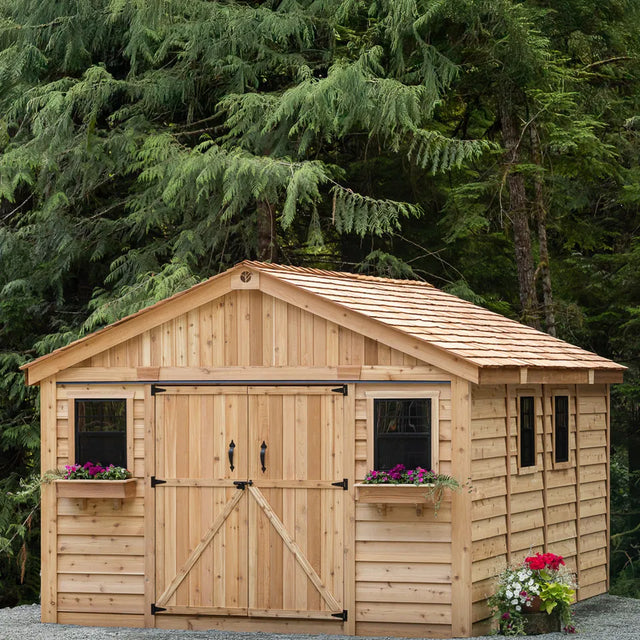
A 4-6 inch bed of compacted gravel is the most popular foundation for garden sheds and greenhouses - it drains rain away from the structure, keeps timber and metal framing dry, and is far easier (and cheaper) to level than a concrete slab. Use angular crushed stone #57 rather than rounded pea gravel: it locks together under weight and won't shift as the building settles.
- Size the pad. Make the gravel base about 12 inches larger than the building on every side - for an 8 × 10 ft shed, that's a 10 × 12 ft pad. The overhang carries roof runoff away from the walls.
- Level the ground first. Strip the turf, then check the site with a long straightedge and level. Cut down the high side rather than filling the low side where you can - loose fill settles. On sloped ground, a timber frame turns the pad into a level platform.
- Add a weed barrier. Landscape fabric under the pad keeps weeds from growing through and stops the stone sinking into the soil.
- Fill and compact in layers. Spread the gravel in 2-3 inch lifts, compacting each with a plate compactor or hand tamper, and check level as you go.
Enter your pad size (building footprint plus 1 ft on each side) at 4 inches deep in the calculator above for the exact yards, tons or bags - then browse Eartheasy's garden sheds and greenhouse kits, for which a well-built gravel base is the recommended first step.
Gravel needed for common project sizes
Not sure where to start? These are typical gravel amounts for popular garden projects, using all-purpose gravel at ~1.4 tons per cubic yard. Figures exclude the 10% buffer - add about 10% when you order.
| Project | Size & depth | Cubic yards | Tons |
|---|---|---|---|
| Garden path | 25 × 3 ft @ 2" | 0.46 yd³ | 0.7 t |
| Pea gravel patio | 10 × 10 ft @ 2" | 0.62 yd³ | 0.9 t |
| Shed and/or greenhouse base | 10 × 12 ft @ 4" | 1.48 yd³ | 2.1 t |
| Fire pit area | 12 ft circle @ 3" | 1.05 yd³ | 1.5 t |
| Raised-bed drainage | 4 × 8 ft @ 3" | 0.30 yd³ | 0.4 t |
| Dry creek bed | 15 × 2 ft @ 4" | 0.37 yd³ | 0.5 t |
Worked examples
Pea gravel path
A 25 ft × 3 ft path at 2 inches deep: 75 sq ft × 0.167 ft = 12.5 cu ft ÷ 27 = 0.46 cubic yards (~0.7 tons). Add 10% and order about half a cubic yard.
Raised-bed drainage layer
A 4 ft × 8 ft bed with a 3-inch crushed-stone base: 32 sq ft × 0.25 ft = 8 cu ft ÷ 27 = 0.30 cubic yards (~0.4 tons) of #57 stone. In containers and raised beds, horticultural pumice is a lightweight, reusable alternative to crushed stone for the drainage layer.
Pea gravel patio
A 12 ft × 12 ft patio at 2 inches deep: 144 sq ft × 0.167 ft = 24 cu ft ÷ 27 = 0.89 cubic yards (~1.2 tons). Lay it over a compacted base and edge it to keep the rounded stones in place.
Shed or greenhouse base
An 8 ft × 10 ft shed needs a pad about 10 ft × 12 ft - extend the base roughly 12 inches beyond the walls on every side. At 4 inches deep: 120 sq ft × 0.333 ft = 40 cu ft ÷ 27 = 1.48 cubic yards (~2 tons) of crushed stone #57. Level the ground first and compact the stone in layers so the building sits flat and dry.
How much does a yard of gravel weigh?
A cubic yard of gravel typically weighs 2,400-2,900 lb (about 1.2-1.45 tons), depending on the stone type and moisture. That means one ton of gravel covers roughly 0.7 cubic yards. Here is how common garden materials compare:
| Material | Density | Weight per cubic yard | Coverage per ton @ 2" |
|---|---|---|---|
| Pea gravel (¼"-⅜") | ~96 lb/ft³ | ~1.3 tons | ~125 sq ft |
| All-purpose gravel (¼"-2") | ~105 lb/ft³ | ~1.4 tons | ~114 sq ft |
| Crushed stone #57 | ~100 lb/ft³ | ~1.35 tons | ~120 sq ft |
| River rock (2"-6") | ~98 lb/ft³ | ~1.3 tons | ~122 sq ft |
| Decomposed granite | ~110 lb/ft³ | ~1.5 tons | ~109 sq ft |
| Lava rock (lightweight) | ~45 lb/ft³ | ~0.6 tons | ~265 sq ft |
How much does gravel cost?
For a small garden project, bagged gravel from a garden center is the simplest option at about $4-$8 per 0.5 cu ft bag. For a larger path or patio, bulk is cheaper per yard - common gravel runs $25-$70 per ton ($40-$90 per cubic yard) before delivery, with decorative stone such as river rock costing more. Typical ranges:
- Pea gravel: $30-$55 / ton ($40-$70 / cubic yard)
- Crushed stone #57: $25-$45 / ton
- River rock: $50-$160 / ton (varies by color and size)
- Decomposed granite: $40-$70 / ton
- Bagged gravel (0.5 cu ft): $4-$8 per bag
- Delivery: $50-$150+ per load
How many bags of gravel do I need?
Bagged gravel is sold by volume - most commonly 0.5 cubic feet per bag (0.4 cu ft and ½ cu ft bags are also sold). To find the bag count, divide your total cubic feet by the bag size and round up. The calculator does this automatically when you enter a bag size.
| You need | Cubic feet | Bags (0.5 cu ft each) |
|---|---|---|
| 0.25 cubic yard | 6.75 cu ft | 14 bags |
| 0.5 cubic yard | 13.5 cu ft | 27 bags |
| 1 cubic yard | 27 cu ft | 54 bags |
| 2 cubic yards | 54 cu ft | 108 bags |
Bulk vs. bagged - which to buy?
Bags make sense for small jobs (under about ½ cubic yard) or where a truck can't reach. Above roughly 1 cubic yard, bulk delivery is far cheaper per cubic foot and quicker than hauling and emptying dozens of bags. As a rule of thumb, 1 cubic yard equals about 54 bags at 0.5 cu ft each - so once you're nearing a yard, bulk almost always wins.
Choosing the right gravel for your garden
| Use | Best gravel | Why |
|---|---|---|
| Walkways & patios | Pea gravel | Smooth, rounded, comfortable underfoot |
| Drainage & raised-bed base | Crushed stone #57 | Angular, interlocks, drains fast |
| Shed & greenhouse bases | Crushed stone #57 | Compacts solid, stays level, drains rain away |
| Container & raised-bed drainage | Pumice or crushed stone #57 | Lightweight, drains fast, won't compact |
| Decorative borders & beds | River rock | Large, attractive ground cover |
| Natural-look paths | Decomposed granite | Compacts firm with an earthy look |
| Lightweight mulch | Lava rock | Very light, long-lasting |
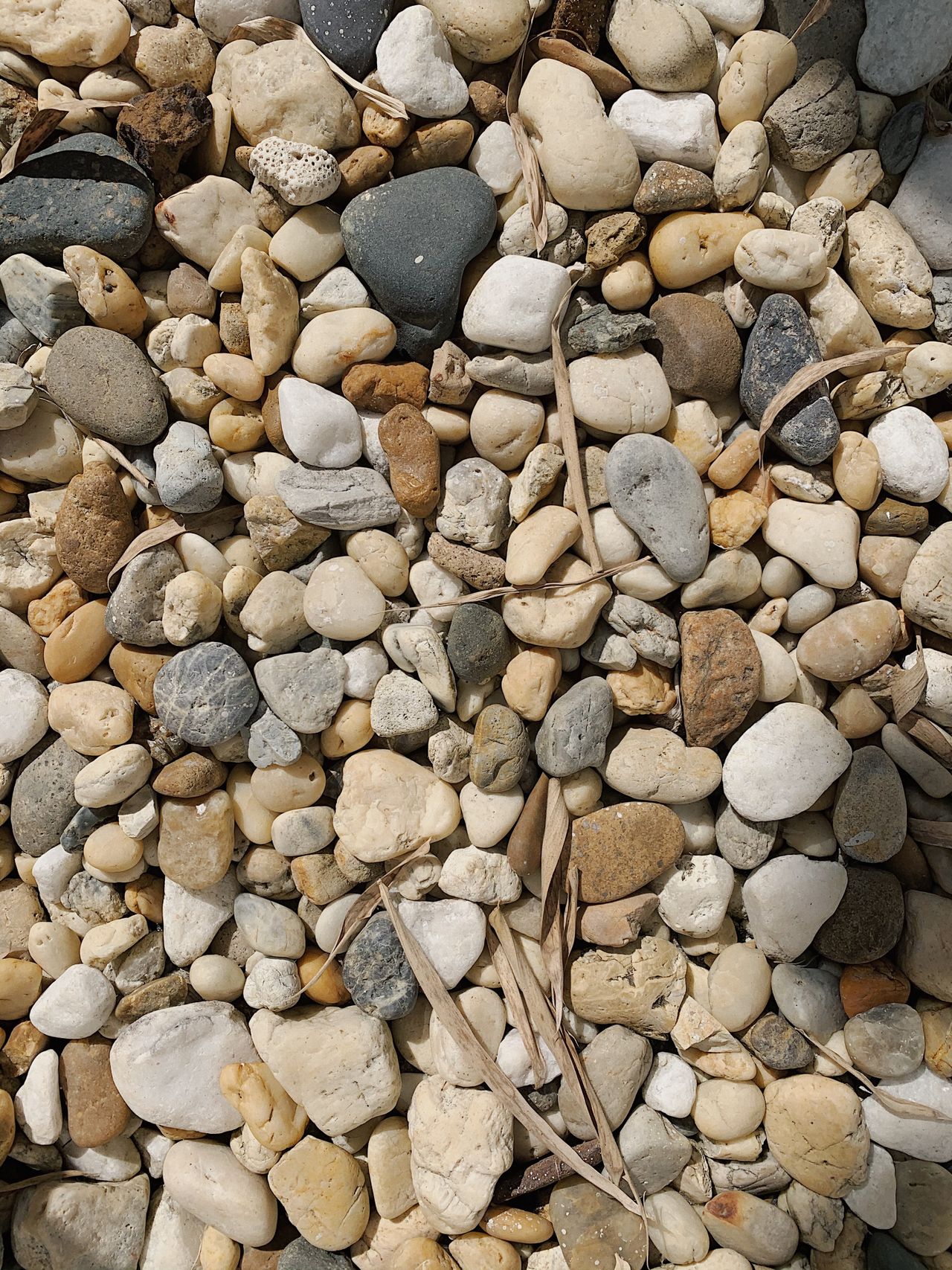
Pea gravel
Smooth, rounded ¼"-⅜" stone that is comfortable underfoot - the go-to for patios, walkways, play areas and dog runs. Because it is rounded it shifts easily, so edge it with borders and lay a compacted base beneath a pea gravel patio.
Crushed stone #57
Angular ¾" stone that locks together and drains fast - ideal as a raised-bed drainage layer, in French drains, and as the compacted base under patios, pavers, sheds and greenhouses.
River rock
Larger 2"-6" decorative stone for borders, dry creek beds and accents around plantings. Best as ground cover rather than a walking surface.
Decomposed granite & lava rock
Decomposed granite compacts into a firm, natural-looking garden path. Lightweight lava rock works as a long-lasting decorative mulch in xeriscapes and around drought-tolerant plants.
Frequently asked questions
How much gravel do I need?
How many cubic yards are in a ton of gravel?
How much does a yard of gravel weigh?
How much is a ton of gravel?
What gravel is best for raised garden beds and drainage?
How much pea gravel do I need for a patio?
How much gravel do I need for a shed base?
What is the best base for a greenhouse?
Should I order extra gravel?
Do I need landscape fabric under gravel?
What's the best gravel for a garden path?
Is pea gravel good for drainage?
How thick should a gravel layer be?
How many bags of gravel are in a cubic yard?
Related reading
More from the Eartheasy library on planning your beds, paths and structures — and working out how much material each one needs.
 Soil Calculator: How Much Soil for a Raised Bed?Filling a bed instead of a path? Get the exact soil volume and number of bags for any shape.
 How to Calculate Soil Volume for Raised Garden BedsThe same volume math as gravel, applied to garden soil — with worked examples for every bed shape.
 12 Things to Consider Before Installing a Raised BedWhere a gravel base fits in: drainage, levelling and site prep before the bed goes in.
 5 Things to Consider Before You Buy a GreenhouseSizing, glazing, insulation and siting — a gravel floor is a favourite for greenhouse drainage.
 Shop Raised Garden Beds & PlantersCedar, composite and recycled-plastic beds and planters in dozens of shapes and sizes.
 Shop Garden Sheds & StructuresSheds, gazebos and garden structures — many set on a compacted gravel pad for drainage.