








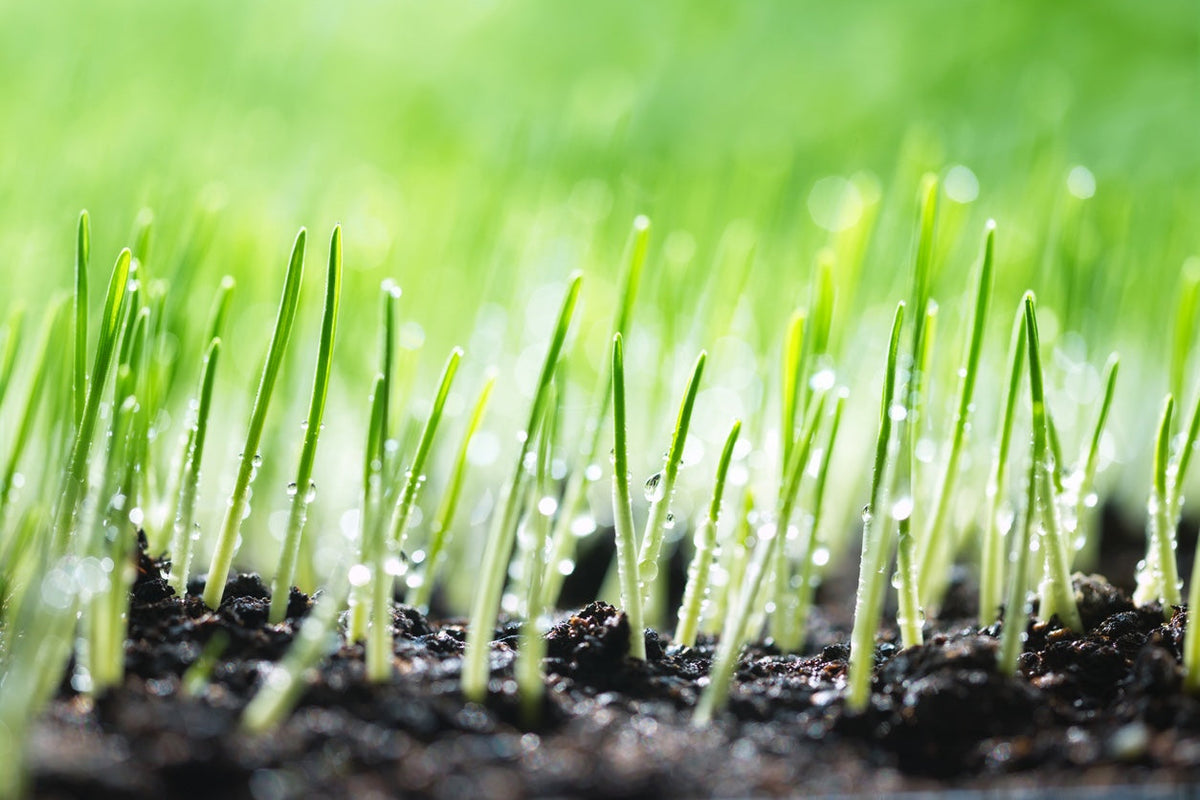
Water new grass seed lightly 2-3 times per day, keeping the top inch of soil moist until germination. Depending on your sprinkler or nozzle, this may take about 5–10 minutes per session. The goal is to dampen the soil, not create puddles or runoff. Once the grass is established, gradually water less often and more deeply as outlined in our week-by-week watering schedule. If you are planning a new lawn, you can also measure your space and use this grass seed calculator.
How often to water new grass seed before germination

Before germination, plan to water new grass seed for 2–3 short watering sessions per day, adjusting for rain. We try to pay attention to forecasts before seeding to take advantage of cooler days and the gentle consistency of rainfall. If needed, watering in the morning, at midday, and during the late afternoon during hot weather is best.
Establishing a new patch of grass takes patience, especially during the germination phase as you expectantly wait for the patch of dirt to be transformed. As Idaho State University Extension and Outreach explains, new grass seedlings are very susceptible to drying out, which stops germination in its tracks and can’t be undone. Newly sown grass seed sits close to the soil surface and can dry out quickly in the sun and heat. Watering lightly and frequently enough to keep the soil and seeds consistently damp is the most effective approach.
The goal is to maintain moisture without disturbing the seeds using a light, gentle spray from a nozzle or sprinkler. In case of heavy rain or overwatering, wait for the soil to dry and then lightly rake to distribute seeds. If needed, hand-cast new seed over washed-out patches, then wait for the green shoots to pierce the soil surface. How quickly the seed germinates depends on the grass type, soil temperature, and growing conditions.
How long to water new grass seed each session
Starting with around 5-10 minutes, aim to moisten the top 1-2 inches of soil. How long you need to water depends on your sprinkler, nozzle, soil type, and weather. Avoid overwatering so as not to create puddles or runoff. As the seedlings grow, gradually increase the depth of watering while reducing the frequency.
A simple way to check soil moisture is with the screwdriver test. Push a standard 4–6-inch screwdriver straight into the soil. If it slides easily through the top few inches, the soil is likely moist enough. If you meet resistance within the first few inches, the soil may be dry or compacted.
You can also measure how much water your sprinkler delivers. Try placing tuna cans, or other similar small containers, around a seeded area and run the sprinkler for a set amount of time. By measuring the water collected in each container and averaging the results, you can get a more accurate idea of how long your sprinkler needs to run to deliver a specific amount of water. We have done this when setting up a new sprinkler as well.
Week-by-week watering schedule for new grass seed
A week-by-week watering schedule for new grass seed makes it easier to manage watering as grass seed germinates and shoots up new growth. The schedule below can be a starting point as you adjust for rainfall, temperature, wind, soil type, and the moisture level of your soil. Germinating seeds are the most susceptible to drying out, while established grass can manage some drought.
|
Week |
Frequency |
Session Length |
Goal |
|
1 |
2-3 times daily |
5-10 minutes |
Keep the top inch of soil moist |
|
2-3 |
1-2 times daily |
15-20 minutes |
Keep emerging sprouts growing well |
|
4-5 |
Every other day |
20-30 minutes |
Train roots to grow deeper |
|
6-8 + |
1-2 times per week |
Deep soak as needed to deliver 1-1.5 inches including rainfall |
Treat as mature grass, deep infrequent watering builds resilient grass |
As a rule of thumb, water frequently and lightly before germination, then gradually transition to deeper and less frequent watering afterwards. Pay close attention to seed germination and adjust for weather to avoid overwatering or underwatering grass seeds and seedlings. Once grass is established, Michigan State University Extension advises looking out for signs of stress, such as the turf turning a dull green rather than bright green or the grass blades remaining flat after you walk across the lawn.
After germination: water deeper, less often

Once most of the grass seed has germinated, you can start to decrease watering frequency. Roots follow moisture, so watering lightly and frequently after sprouting keeps roots shallow. As the new seedlings become established, gradually increase the amount of water applied during each session while spacing the sessions farther apart. Adjusting from daily waterings to every other day and then twice a week as the sprouts thicken will help to develop strong roots.
The exact timing and amount of water depends on your soil and weather conditions on any given day. The soil should be moist below the surface, but it should have time to drain between watering sessions.
Whenever possible, water in the early morning. Watering late in the evening can leave young grass and the soil surface wet for longer, creating conditions that favor fungal problems.
When can you stop watering new grass seed daily?
You can stop daily watering once grass is established, several weeks past germination, and switch to about 1 inch per week, including rain. At this stage there should be even growth and the grass should be 2-3 inches tall, with roots that have grown down 1-1.5 inches into the soil.
As the root growth deepens, grass becomes more drought tolerant and less susceptible to pest problems. Instead of frequent, shallow watering, apply enough water to moisten the soil more deeply and allow it to dry somewhat between sessions. In the case of extreme heat or wind, adjust this schedule accordingly. An indication of good health and root strength is grass that is not prone to wilting if you happen to miss a day of watering. For more tips on keeping a natural, lush lawn, read our article on natural lawn care.
Signs of overwatering and underwatering grass seed
Keeping an eye on your emerging grass pays off. It is important to pay attention to signs of overwatering and underwatering grass seed throughout all the stages of growth. Soil should stay consistently moist in the beginning, as dry soil will inhibit germination, but excessive water can also be problematic. Watch for any of the following signs and adjust your watering method and schedule when necessary.
Signs of overwatering
- Puddles or standing water: Provide light and frequent moisture, avoiding saturation.
- Grass seed washing out or collecting in clumps: Avoid heavy watering by adjusting settings on nozzles and sprinklers.
- Persistent wet soil: Reduce the frequency of waterings.
- Fungal growth: Avoid watering in the evenings or overnight.
- Damping-off or rotting seedlings: Allow the soil to dry out between waterings.
Signs of underwatering
- Pale, dry soil at the surface: Water in short, frequent bursts.
- Grass seedlings wilting during the day: Aim to keep the soil moist.
- Patchy or uneven germination: Ensure even distribution of seeds and water.
- Seed that remains dormant because the soil repeatedly dries out: Increase the frequency of watering until seeds germinate.
Adjusting for weather, season and soil type
Establishing new grass means considering weather, season and soil type. Adjusting for these will ensure healthier seedlings with better growth rates. Heat or wind may mean additional watering sessions, whereas rainfall can replace some. Summer seeding is more challenging because heat, wind, and evaporation can quickly dry the seedbed. Summer seeding can also mean increased watering costs, so thoughtful consideration of seasonal timing can shrink the job. Soil type can also affect irrigation needs.
On hot or windy days, you may need an additional light watering session. Rainfall can replace a scheduled watering session, but check the soil before skipping the next one. Heavy rain, meanwhile, can make additional watering unnecessary but may also wash away seed or cause runoff.
Water in the morning when possible to reduce evaporation. Although evening watering may seem convenient, moisture that remains on young grass overnight can increase the risk of fungal problems. Always pay close attention to new seedlings for signs of stress, and adjust watering if needed.
Understanding the soil type is important for determining irrigation needs. Clay soils absorb water slowly, so short, split watering sessions can help prevent runoff. Sandy soils drain quickly and may need shorter, more frequent sessions to keep the seedbed moist.
Sprinklers, timers, and hand watering

The watering method you choose can make it easier—or harder—to maintain consistent moisture while protecting the seed. Ideally, rain will assist when you are establishing new grass seed but irrigation is usually needed.
An oscillating or other gentle sprinkler can provide broad, even coverage for larger areas. Avoid hard streams of water that can lead to pooling and runoff. For small patches, you can water manually using a hose fitted with a fine-spray nozzle or rain wand to deliver a gentle stream of water without disturbing the seed.
A watering timer can also help maintain a consistent schedule, especially during the first couple of weeks when the seedbed should not be allowed to dry out. Timers can be set to water throughout the day, whether attached to a moveable sprinkler or a permanent in-ground irrigation system.
Make sure to check your lawn for areas that receive too much or too little water, particularly where sprinkler coverage overlaps. Enjoy a barefoot walk around as you check seedlings for signs of stress, and adjust watering if needed.
How much grass seed will you need?
Wondering how much grass seed you will need for your new lawn? A good watering schedule starts with the right amount of seed. Use the free grass seed calculator to estimate how much you need based on your lawn size and grass type. Measure the area you want to seed, then calculate the amount needed before you begin.


FAQ: Watering new grass seed
What happens if you miss a day of watering new grass seed?
If you miss a watering session, don't panic. Ungerminated seed can often tolerate a brief period of drying. Newly sprouted seedlings are more vulnerable. If the soil has dried out, water thoroughly the next morning, taking care not to create runoff or wash away the seed.
Can you overwater new grass seed?
Yes. Too much water can wash grass seed out of place, create puddles, and leave the soil continuously wet. Excess moisture can also encourage fungal problems and damping-off in young seedlings. Water enough to keep the seedbed moist, but allow excess water to drain away.
Can new grass seed go a day without water?
In cool, mild weather, ungerminated seed may tolerate a day without water if the soil remains moist. Newly emerged seedlings are less tolerant, particularly during hot or windy weather. Check the soil before deciding whether to skip a watering session.
What is the best time of day to water grass seed?
Early morning is generally the best time as cooler temperatures reduce evaporation, while the soil has time to absorb the water before the heat of the day. If additional watering is needed, early afternoon can be preferable to evening. Avoid routine late-evening watering because prolonged moisture increases the risk of fungal problems.
What if you want a lawn that needs less water?
Establishing new grass can be a lot; we get it. There are alternatives if you would enjoy a lawn that is less maintenance and needs less water. One easy option is establishing a low-water clover lawn. A clover lawn is more drought-tolerant and grows slowly. It requires about a third less water than a turf lawn. For more low-maintenance lawn ideas, see our article on lawn alternatives.