









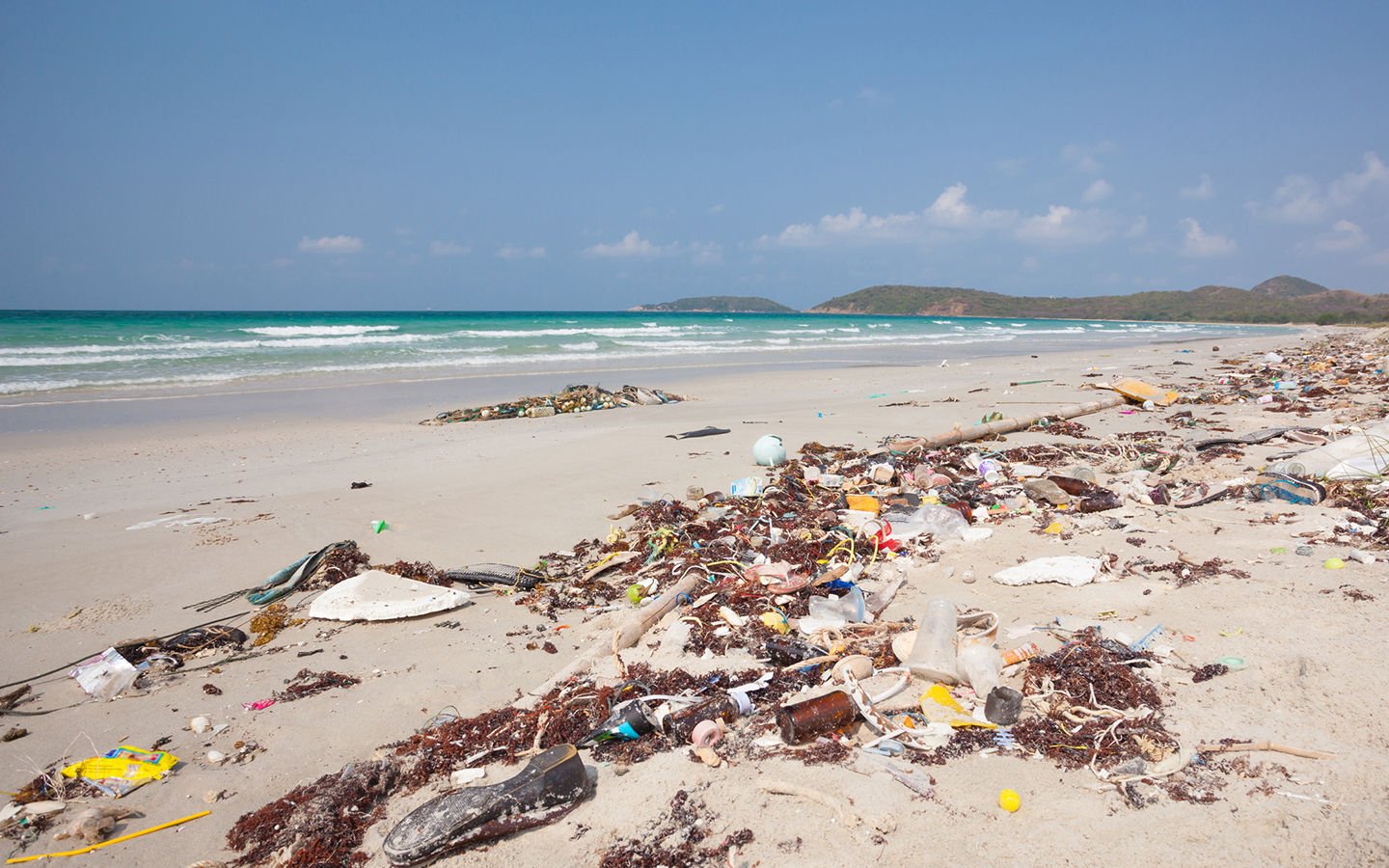
Plastic particles less than 1mm, defined as ‘microplastics’, have been steadily accumulating in marine environments across the globe. Studies of shoreline debris at 18 different locations worldwide have identified small, fibrous particles of plastic which are washed up on beaches, embedded in sediments and even found in cell tissues of marine organisms.
While plastic waste on beaches is a common sight, the study reported in the journal Environmental Science and Technology noted that about 80% of the plastic they found is in the form of small particles which may not be apparent visually but do pose real concerns of environmental contamination. One concern is the potential for plastic entering the food chain as a consequence of ingestion by marine species.
The sources of plastic contamination are numerous, but researchers who have analyzed the particulate matter have identified synthetic textiles as a primary contributor to the buildup of microplastics found in shoreline areas. When synthetic clothing such as polyester, acrylic and nylon are washed in conventional washing machines, minute fibrous particles are released from the garments and discharged into the environment through sewage outlets. Analysis of sediments at test sites showed that the proportions of polyester and acrylic fibers used in clothing resembled those found in habitats that receive sewage-discharges and sewage-effluent itself. Concentrations of microplastics were found to be highest near urban centers.
Based on earlier findings which had uncovered plastic fibers at land sites treated with sewage, the researchers sampled outflows from sewage-treatment plants. These waters were found to contain acrylic and polyester fibers anywhere from 1 millimeter down to 10 micrometers in diameter. Tracking the sources of water entering sewage treatments led researchers to study the wastewater from washing machines.
Experiments sampling wastewater from domestic washing machines demonstrated that a single garment can produce in excess of 1900 fibers released per wash. Polyester fabrics are used to make a wide variety of clothing such as shirts, pants, dresses, sweaters, fleeces and blankets. The biggest source of these shedded fibrous threads was fleece.

Study co-author Mark Browne noted that as the small particles of fibrous plastic are ingested by marine species, the plastic particulates transferred from their stomachs to their circulation system and accumulated in their cells. While further research is needed to determine to mechanisms by which microplastics can advance through the food chain, these preliminary findings are cause for concern. According to marine ecologist Henry Carson of the University of Hawaii at Hilo, “These tiny pieces have the potential not only to get inside tissues of mussels and other animals,” he says, “but to actually move into their cells. That’s pretty frightening.”
Microplastics can be further tainted by absorbing and concentrating other fat-soluble pollutants in the marine ecosystem, such as DDT, polychlorinated biphenyls and polycyclic aromatic hydrocarbons. These pollutants are readily released into fatty tissues of the animals which ingest the microplastic particles. This ability of microplastics to transfer other pollutants into fatty tissues of marine organisms has compounded the threats associated with microplastic pollution.
Consumers looking to help reduce the buildup of microplastic pollution have limited options at present. Even clothing made of natural fibers such as cotton and wool produces ammonia and methane during decomposition in landfills. Exercising restraint in buying new clothing is certainly a good start – do we really need all the garments which fill our closets and drawers? Do we need to replace unworn clothing as fashion trends shift? Recycling textiles is also helpful since this reduces the demand for virgin resources. The processes involved in the reuse and recycling of textile waste result in less pollution and energy use than the energy intensive processes involved in making textiles from virgin material.
While consumer restraint and textile recycling may not be solutions to the threats posed by microplastic pollution, these measures help reduce the number of new synthetic textiles being produced.
 Responses (13)