




By Shannon Cowan
A single deer can eat up to ten pounds of garden vegetation in a day, and once a herd discovers your yard, the damage compounds fast — nibbled tulips, snipped pea vines, trampled lettuce beds. This guide walks through the five methods we've seen actually keep deer out of a garden, from the eight-foot fence that solves the problem outright to the deer-resistant plants, scent-based repellents, motion-activated sprinklers, and layered strategies you can mix and match for the size of yard you're working with. We'll also flag the popular "tricks" — soap bars, hanging hair, fishing line — that look clever online but don't hold up in practice.
Key takeaways
- A sturdy mesh fence of eight feet is your best defense. Alternatively use solid fence panels at six feet high, since deer hesitate to jump barriers when they can't see what's on the other side.
- For added protection, pair fences with motion-activated sprinklers or spray repellents.
- Deer avoid fuzzy, prickly or strongly scented plants like herbs, peppers and ornamentals such as daffodils and foxglove. Use these in borders or interplanted with more vulnerable crops.
- Spray-on repellents work well for protecting specific plants but require consistent application and rotating between different brands to maintain effectiveness.
There's nothing worse than finding your garden eaten down to within an inch of its life. Nibbled tulips, snipped peas, even trimmed turnips: deer will sample almost any flowers and vegetables, leaving behind a trampled mess of foliage and roots. But there are ways to keep them from feasting on your plants. A combination of prevention, distraction and outright stealth can help you avoid deer damage for the long term.
Protect your plants from unwanted foragers using methods that really work.
Why deer are such a challenge in the garden
White-tailed deer populations across North America have rebounded to levels that put nearly every suburban and rural garden within reach of a hungry herd. A mature deer needs five to ten pounds of forage a day, and a tender vegetable patch or freshly bloomed perennial bed offers exactly the kind of high-water, high-nutrient browse they prefer. Deer move along predictable corridors at dusk and dawn, and once they identify your garden as a reliable food source, they return night after night — and bring company.
Browse damage tends to cluster: deer nibble the top growth off tulips and hostas, strip the new leaves from young fruit trees, and shear off pea, bean, and lettuce seedlings just as they emerge. Spring fawning increases pressure on tender new growth, and fall rut brings antler rubbing that can girdle young trees and shrubs.
Before you invest in deer-proofing, confirm the culprit really is deer. Slugs, rabbits, groundhogs and other garden visitors leave distinctly different damage patterns. The telltale signs of deer:
- Plants clipped off unevenly, with ragged or shredded edges (deer have no top front teeth, so they tear rather than slice)
- Nearby foliage trampled or flattened
- No silvery slime trails (which would indicate slugs)
- Damage extending well above one foot from the ground
- Oval droppings roughly 0.8–1.2 inches across

Spring bulbs nibbled by deer show snipped and ragged tops

A laurel hedge browsed by deer shows chomped leaves with browning edges.
If you're certain that deer are the cause of your woes, it's time to find a solution. After forty years of backyard gardening, our family has tried just about everything that claims to stop deer in their tracks. Some of these methods work, but only under perfect conditions. Others work under a broad range of conditions, but cost more from the outset.
Deer-proofing methods fall into three broad categories:
- Barriers: Anything that physically stops deer from entering your garden is your first line of defence. Fences, ditches, rocky berms or swales, cattle guards and other obstructions all have their place, depending on your situation. The key is building them with deer in mind.
- Repellents: Gardeners apply repellents to stop deer from eating specific plants in the garden. Many of these products use scents to ward off deer, while others temporarily taint the taste of your crop, so deer never get beyond the first nibble.
- Scare tactics: Some controls scare deer away from your garden using sound and movement. Deer are highly attuned to their environment, ready to bolt at the smallest sign of a threat. Since you can't stand in your garden clapping all night long, motion and sound systems do the job for you.

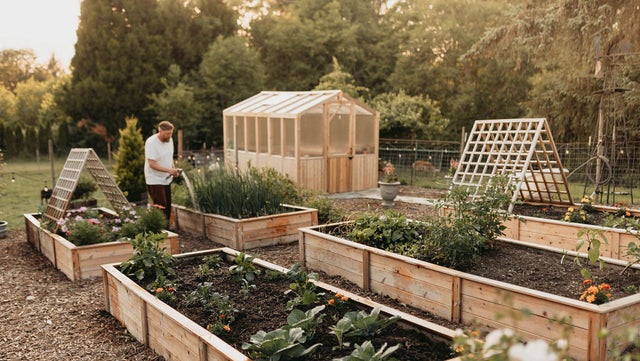
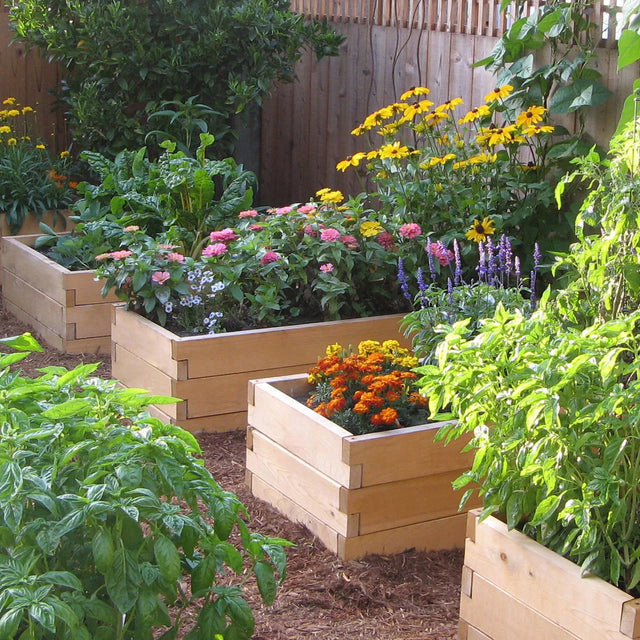
Deer Proof Cedar Complete Raised Garden Bed Kit - 8' x 8' x 20"
Method 1 — Build a deer fence that actually works

Fencing is the single most reliable defense against deer. Every other method on this list works best as a layer around a solid fence, not as a replacement for one. The trick is getting the height, material, and configuration right for your property.
How tall does a deer fence need to be?
A deer fence should be at least 8 feet tall to reliably keep out white-tailed deer. Seven feet is the practical minimum; deer can clear a 6-foot fence from a standing start and a 7-foot fence under stress. A solid panel fence at 6 feet often works as well as an 8-foot mesh because deer avoid jumping barriers they can't see through — they won't risk landing in unknown territory. For maximum protection without breaking sight lines, pair an 8-foot black polypropylene mesh fence with stakes set every 10 feet. Slope or angle the top outward by 45 degrees if you're working with less height. For raised beds and small plots, see our year-round raised bed guide.
Mesh fence vs. solid panel vs. electric — which to choose
The right material depends on garden size, budget, and how visible you want the fence to be.
- Mesh (polypropylene, black): cheapest per linear foot, near-invisible from a distance, easy DIY install. Best for medium gardens (250–2,000 sq ft).
- Solid panel (cedar, vinyl): expensive, looks like privacy fencing, doubles as a visual barrier. Best for small ornamental yards near property lines.
- Electric polywire: 3–5 wire strands, baited with peanut butter on the second strand to teach deer to avoid contact. Best for orchards, large vegetable plots, and rural properties.
Fencing for small plots and raised beds
If you don't want to fence an entire yard, fence just the high-value beds. A 6-foot wire mesh wrapped around the perimeter of a raised vegetable bed — secured to corner stakes 6 inches above ground level — keeps most deer out without affecting how you garden. For smaller raised beds (under 4×8 ft), a hoop frame of PVC or galvanized conduit fitted with bird netting works just as well, especially for seedlings and leafy greens. Explore our raised garden beds collection for bed kits that pair naturally with mesh enclosures.

Deer Proof Cedar Complete Raised Garden Bed Kit - 8' x 12'
Method 2 — Plant a deer-resistant garden
No plant is deer-proof, but some are reliably unappealing — strong-scented herbs, bitter or toxic foliage, fuzzy textures, and the entire allium family rank low on the deer preference list. Building a perimeter of these around your most vulnerable plants creates a scent and taste barrier that turns most casual browsers away. The list below is adapted from the Rutgers University "Landscape Plants Rated by Deer Resistance" — the standard reference for deer-resistance ratings in North American horticulture.

Hellebore is one of many ornamental plants that deer dislike.
Deer-resistant plants for edible and ornamental gardens
| Plant | Type | Deer resistance (Rutgers) | Notes |
|---|---|---|---|
| Lavender | Ornamental herb | Rarely damaged | Strong scent; perennial USDA 5–9 |
| Rosemary | Edible herb | Rarely damaged | Drought-tolerant; perennial USDA 7+ |
| Sage | Edible herb | Rarely damaged | Aromatic foliage; perennial USDA 4–8 |
| Thyme | Edible herb | Rarely damaged | Groundcover; perennial USDA 5–9 |
| Mint | Edible herb | Rarely damaged | Aggressive — plant in containers |
| Oregano | Edible herb | Rarely damaged | Strong-scented; perennial USDA 5–10 |
| Chives | Edible bulb | Rarely damaged | Onion family — all alliums deter deer |
| Garlic | Edible bulb | Rarely damaged | Allium scent |
| Onion / Leeks | Edible bulb | Rarely damaged | All alliums work; deer avoid the whole family |
| Hot peppers | Edible | Seldom damaged | Capsaicin in leaves and fruit |
| Asparagus | Edible perennial | Seldom damaged | Fern foliage unappealing |
| Rhubarb | Edible perennial | Seldom damaged | Toxic oxalic acid in leaves |
| Artichoke | Edible | Seldom damaged | Coarse, thistle-like foliage deer avoid |
| Fennel | Edible herb | Seldom damaged | Strong anise scent deters browsing |
| Cucumbers | Edible | Occasionally damaged | Prickly vines less preferred; protect fruit |
| Potatoes | Edible | Occasionally damaged | Leaves occasionally eaten; tubers safe underground |
| Squash | Edible | Occasionally damaged | Prickly leaves discourage browsing |
| Eggplant | Edible | Occasionally damaged | Less preferred than tomatoes; fence in high-pressure areas |
| Tomatoes | Edible | Occasionally damaged | Foliage usually skipped but ripe fruit at risk; fence in high-pressure areas |
| Daffodils | Ornamental bulb | Rarely damaged | Toxic to deer; spring bloom |
| Foxglove | Ornamental | Rarely damaged | Toxic alkaloids; biennial |
| Marigolds | Ornamental annual | Seldom damaged | Strong scent; companion plant for veggies |
| Allium (ornamental) | Ornamental bulb | Rarely damaged | Late-spring globe blooms |
| Lamb's ear | Ornamental | Rarely damaged | Fuzzy texture deer dislike |
| Russian sage | Ornamental | Rarely damaged | Drought-tolerant; perennial USDA 4–9 |
| Catmint (Nepeta) | Ornamental | Rarely damaged | Cat magnet, deer repellent |
| Coneflower (Echinacea) | Ornamental | Seldom damaged | Drought-tolerant native; perennial USDA 3–9 |
| Hellebore | Ornamental | Rarely damaged | Early-spring bloom; evergreen leaves |
| Boxwood | Shrub | Rarely damaged | Evergreen hedge |
| Juniper | Shrub | Rarely damaged | Evergreen; prickly |
| Barberry | Shrub | Rarely damaged | Thorny — check invasive status by region |
| Salvia | Ornamental | Rarely damaged | Aromatic foliage; perennial USDA 4–9 |
| Aster | Ornamental | Seldom damaged | Late-season blooms; perennial |
| Astilbe | Ornamental | Seldom damaged | Shade-tolerant; feathery plumes |
| Bee balm (Monarda) | Ornamental | Seldom damaged | Minty scent; pollinator favorite |
| Campanula (bellflower) | Ornamental | Seldom damaged | Bell-shaped blooms; perennial |
| Dianthus | Ornamental | Seldom damaged | Spicy-scented; perennial pinks |
| Euphorbia (spurge) | Ornamental | Rarely damaged | Milky sap is irritating and unpalatable |
| Geranium (hardy) | Ornamental | Seldom damaged | Scented foliage; cranesbill types perennial |
| Heuchera (coral bells) | Ornamental | Seldom damaged | Colorful foliage; shade-tolerant perennial |
| Lupin | Ornamental | Seldom damaged | Tall spires; foliage contains bitter alkaloids |
| Lungwort (Pulmonaria) | Ornamental | Rarely damaged | Fuzzy, mottled leaves; shade groundcover |
| Primula (primrose) | Ornamental | Seldom damaged | Early-spring color; shade-tolerant |
| Rudbeckia (black-eyed Susan) | Ornamental | Seldom damaged | Coarse, hairy foliage; native perennial |
Reading the table: "Rarely damaged" and "Seldom damaged" plants are the most reliable picks; "Occasionally damaged" edibles (tomatoes, squash, eggplant, cucumbers, potatoes) are less preferred but not deer-proof, so fence or cover them in high-pressure areas. Every plant from the original list is retained and rated, with the strong herb-and-allium picks plus toxic-foliage ornamentals (daffodils, foxglove, hellebore) leading the list.
Related: 25 Beautiful Plants for Your Edible Landscaping
Plants deer love (and where to put them, if at all)
Some plants are deer candy. If you want to grow them, place them inside fenced areas, under hoop covers, or directly against the house where deer feel exposed. The plants most reliably damaged in North American gardens, based on Rutgers ratings and Cornell Cooperative Extension reports:
- Hostas — first targets in most yards; foliage gone overnight once deer find them.
- Tulips — flowers and buds nibbled flat just as they bloom.
- Daylilies — buds and flower stalks are first to go.
- Hydrangeas (smooth and panicle types especially) — new growth heavily browsed.
- Azaleas and rhododendrons — frequently damaged, especially in winter when other browse is scarce.
- Arborvitae — deer strip the lower 5 feet to bare branches; one of the most-damaged landscape shrubs in the country.
- Impatiens — frequently damaged, especially traditional varieties. The newer Sunpatiens hybrids are somewhat more resistant.
- English ivy and most young vegetable seedlings — repeatedly hit during peak browse pressure.
- Dahlias and most begonias — variable: deer pressure and variety both matter, but plan for damage in moderate-to-high pressure areas.
Keep these plants at least 6 feet from any unfenced edge of the garden — deer move along the perimeter first, and anything within easy reach of that route is the first to disappear.
Method 3 — Use spray-on and scent-based repellents
Liquid repellents work by making plants smell or taste wrong to a browsing deer. Applied on a regular schedule and rotated between active ingredients, they're an effective second layer behind fencing — especially during peak browse pressure in spring and fall.
How commercial deer repellents work
Commercial repellents fall into two main active-ingredient families. Smell-based formulas use putrescent egg solids (Deer Out, Bobbex) to broadcast a rotting-protein scent that triggers deer's predator-detection instincts. Taste-based formulas use capsaicin (Liquid Fence, Plantskydd) to make leaves bitter and unpleasant once a deer takes a bite. Some products combine both. Apply on dry foliage, reapply after heavy rain, and re-spray new growth every two to four weeks as plants put out fresh leaves the original residue doesn't cover.
How to make your own DIY deer repellent
A simple homemade spray combines ingredients you likely already have. Whisk together two large eggs, one cup of milk or yogurt, two tablespoons of dish soap, two tablespoons of cooking oil, and one tablespoon of hot pepper flakes or cayenne in one gallon of water. Let the mixture sit for 24 hours, strain it through cheesecloth, and pour into a pump sprayer. Apply to the foliage of vulnerable plants every two weeks, after heavy rain, and on any new growth. This recipe is adapted from University of Minnesota Extension and rivals commercial sprays in field trials when applied consistently.
Rotating brands to prevent deer habituation
Deer adapt to a single repellent within four to six weeks. To prevent habituation, alternate between at least two products with different active ingredients — for example, an egg-based formula one month and a capsaicin-based formula the next. Always reapply after heavy rain (within 24 hours), and re-spray new growth as plants put out fresh leaves. For larger plots, use a backpack sprayer rather than a trigger bottle to cover canopies evenly. Consistency matters as much as rotation: a single missed reapplication — especially right after spring rain or on new growth — is the most common reason gardeners conclude "repellents don't work." Calendar the application schedule, and treat it like watering. Sprays work best as a perimeter and accent layer in combination with fencing — not as the only defense.
Method 4 — Deploy motion-activated and scare-based deterrents
Sudden movement, water, sound, or light disrupts a deer's feeding routine and pushes them onto a different route. These devices are most effective when moved every two to three weeks so deer don't learn to predict and ignore them.

Motion-activated sprinklers can be effective deterrents for deer and other creatures.
Sensors that switch on outdoor lights as you're groping around in the dark are a lifesaver for people. Sadly, they don't stop deer from coming into your yard. What does work are motion-activated sprinklers.
How do motion-activated sprinklers work?
These little wonders are mounted onto spikes that you can drive into your lawn at intervals. When the sensors detect motion, they'll send a jet of water 35 to 100 feet in its direction. Not surprisingly, this startles most animals into running away.
Today's models have varying ranges. Some are even solar powered, so your garden stays protected even if the power grid goes down. Just keep in mind you'll need to install enough to cover your entire garden, or deer may map out an alternate route to your crops.

Deer Proof Cedar Complete Raised Garden Bed Kit - 8' x 16'
How to use noise and motion to scare deer away
Scaring deer away is effective, if not always easy, in rural areas where deer are more skittish and people-shy. Using noise and motion can stop deer from establishing routine grazing habits on your property, but like repellents above, these must be consistent. They are most effective when used in the short term or in combination with other methods. Here are the most common methods used today:
- Guard dogs. In addition to deterring deer through scent, an active dog in the yard will also repel deer by sight and sound. While certain breeds are more suited to guarding, any dog that barks, runs and urinates will have some effect. The important thing to consider is how your neighbours will feel about a dog barking outdoors at twilight or dawn—when much of the deer damage happens.
- Flagging/shiny strips. Adding shiny strips of flagging tape to fences and string lines around raised garden beds can protect a small area in the short term. Over the long term, deer will get used to the look and movement of these deterrents. It's also worth considering that most of these items end up in the trash within one or two growing seasons.
- Audio. Noise from a radio blaring can keep deer away temporarily. However, over time deer will get used to the sound no matter how loud. Blasting songs or conversation is less practical at night, when you and your neighbours are trying to sleep.
- Predator-eye and ultrasonic devices. Solar predator-eye lights (small LED units that mimic a predator's reflective gaze at night, around $10–20 each) and ultrasonic deterrents add friction to a deer's evening routine. None work indefinitely on their own, but rotated through the season and combined with sprinklers and fencing they sharpen the overall deterrent picture.

Method 5 — Combine methods by garden size and season
No single deer deterrent works perfectly in all situations. The most successful gardeners use a layered approach, combining multiple methods to create overlapping zones of protection. Think of it as building a fortress: each layer makes it harder for deer to reach your plants, and together they're far more effective than any single solution.
Small garden strategies (under 250 square feet)
For compact gardens, focus your efforts on intensive protection. A combination of motion-activated sprinklers and deer-resistant plant borders creates an effective barrier without requiring a major fencing investment.
Place 2-3 motion-activated sprinklers around your garden's perimeter, positioning them to overlap coverage areas. Surround your most vulnerable crops with a border of strongly scented herbs like rosemary, lavender and mint. Apply spray-on repellents to your most prized plants every 1-3 weeks, alternating between commercial products and DIY egg-based recipes.
Medium garden strategies (250-2000 square feet)
At this scale, consider installing a permanent fence as your primary defense. A 6-foot solid fence or 8-foot wire mesh fence provides reliable protection and pays for itself over time. Inside the fence, plant deer-resistant varieties near the perimeter as a secondary barrier in case deer breach the fence. Add motion-activated sprinklers near gates and entrances where deer are most likely to test for access. For high-value crops like fruit trees or berry bushes, apply repellents as an extra layer of protection during peak browsing seasons.
Large property strategies (over an acre)
For extensive properties, fence your most important garden areas. This might include your vegetable garden, orchard, or prized ornamental beds. Outside the fenced zones, plant ornamentals deer dislike, effectively creating buffer zones that discourage them from exploring further. Consider adding a guard dog whose territory includes both fenced and unfenced areas. The dog's scent and presence will deter deer from regular visits to your property.

Deer Proof Cedar Complete Raised Garden Bed Kit - 12' x 8'
Seasonal adjustments
Deer activity varies throughout the year. In spring, when tender shoots and bulbs emerge, increase protection with frequent repellent applications and make sure motion sensors are working properly. Summer typically brings reduced pressure as natural browse becomes abundant, allowing you to scale back efforts. Fall requires renewed vigilance as deer prepare for winter and increase feeding. Winter is the most challenging season when hungry deer will test every defense. This is when deer-resistant plants and sturdy fencing prove their worth, as other methods become less reliable.
Budget-conscious combinations
If you're working with limited funds, start with the most cost-effective methods and build up over time. Begin with deer-resistant plants and DIY egg-based repellents. Add one or two motion-activated sprinklers to protect your highest-value crops. As budget allows, install fencing around small sections of garden, expanding the fenced area each year. Remember that even a partial fence combined with other methods provides more protection than any single approach alone.
What doesn't work — popular myths and common mistakes
Popular myths that don't hold up
A handful of "deer-proofing" tricks circulate widely online and in gardening folklore, but field tests and university extension trials consistently show they provide little to no lasting protection. Bars of Irish Spring soap hung in mesh bags may mask attractive plant scents for a week or two in low-pressure areas, but deer habituate quickly and rain washes the scent out. Human hair scattered around the garden has shown almost no measurable effect — deer in suburban areas are far too accustomed to human scent to be deterred. Fishing line strung at deer-shoulder height is a perennial Pinterest favorite, but in practice deer either feel and avoid the line for a few visits then push through it, or simply step around. Single-strand fencing at any height fails — deer either jump it or duck under. Marigold-only borders scent-deter casually browsing deer but won't stop a determined herd in spring. Skip these as primary strategies; reserve them, at most, as supplemental layers around real defenses.
Understanding why deer deterrents fail is just as important as knowing which ones work. Many gardeners become frustrated when a promising solution stops working, but the problem is usually in the application rather than the method itself.
Inconsistent application
The number one reason repellents fail is inconsistent reapplication. Spray-on deer repellents break down in sunlight and wash away in rain. If you're not reapplying every 1-3 weeks—or immediately after heavy rain—you're leaving your plants unprotected. Set reminders on your phone or mark your calendar for repellent applications. Consider it as essential as watering.
Habituation to deterrents
Deer are remarkably intelligent and adaptable. Combat habituation by rotating your deterrents. Move motion sprinklers to different locations every few weeks. Alternate between different types of repellents. Change the radio station. Keep deer guessing, and they'll remain wary.
Inadequate fencing
Many first-time fence builders underestimate what it takes to keep deer out. A four-foot fence might look substantial, but deer can easily clear six feet and will jump eight feet when motivated. Flimsy T-post and mesh installations often get knocked down by larger bucks who simply push through. Wire spacing that's too wide allows deer to stick their heads through and browse. The solution is simple but requires investment: build fences tall enough as noted above or use 6-foot solid panels that deer can't see over. Inspect your fence regularly and repair any damage before deer learn they can breach it.
Single-method reliance
Perhaps the most common mistake is depending on one deterrent. Deer-resistant plants work in summer when other food is plentiful, but hungry deer in late winter will sample even plants they normally avoid. Motion-activated sprinklers provide excellent protection until batteries die or sensors get covered in spider webs. Repellents work well until you forget to reapply after that unexpected rainstorm. Combining multiple approaches ensures that when one fails, others continue protecting your garden.
Ignoring deer pressure and local conditions
A method that works for your neighbor might fail completely in your garden because every property faces different 'deer pressure'. Properties bordering wild areas typically have more deer traffic than urban gardens. Suburban deer, accustomed to human presence, are bolder than rural deer and less frightened by scare tactics. During drought years or harsh winters, deer become desperate and will overcome deterrents they'd normally respect. Before investing in any single method, observe your local deer population. Are they skittish or bold? How many visit regularly? What time do they appear? Tailor your strategy to your specific situation.
Poor timing and reactive approaches
Installing deterrents after deer have discovered your garden is much harder than preventing access from the start. Deer are territorial and establish regular feeding routes. Once your garden becomes part of their nightly rounds, breaking that pattern requires persistent effort. The time to install fencing, plant deer-resistant borders, and set up motion sprinklers is before you plant your garden—or at minimum, before the first shoots emerge.
How to protect a vegetable garden specifically
Vegetable gardens are deer magnets. Lettuces, peas, beans, squash blossoms, tomato tops, and almost anything in seedling stage are at the top of a deer's preference list — and unlike ornamental damage, deer browsing on a vegetable plot can wipe out a season's harvest in a single night. The most reliable protection is layered:
- Fence the plot, not the yard. A 6 to 8-foot mesh fence around the vegetable area is cheaper, easier, and more effective than fencing an entire property. Bury the bottom 6 inches or pin it tight to the ground to discourage deer from crawling under.
- Build vertically. Deer browse at ground-to-shoulder height. Trellised peas, pole beans, and tomato cages grown against a fence line concentrate value where the deer can't easily reach it.
- Use raised beds with hoop covers. Raised beds put the canopy 18–24 inches off the ground, and a clip-on hoop frame with bird netting or row cover stops both deer and smaller browsers like rabbits. See our year-round raised bed guide for setup details, or browse our raised garden beds collection for kits.
- Rotate repellents on the perimeter. Spray the outside row of the plot (not the produce itself) every two weeks, switching between scent-based and taste-based formulas.
- Plant a deterrent border. A ring of garlic, chives, lavender, and marigolds around the vegetable beds adds a second line of scent defense.
For broader pest pressure beyond deer — rabbits, groundhogs, voles — see our how to keep animal pests out of your garden and natural garden pest control guide.
Frequently asked questions
How do I keep deer from eating my garden?
Combine three layers: an 8-foot mesh fence around the vegetable plot (deer rarely jump a fence they can't clearly see over), scent-and-taste repellents rotated every 4–6 weeks on the perimeter, and a planting palette built around alliums, strong-scented herbs (lavender, rosemary, sage), and deer-resistant ornamentals like foxglove and daffodils. No single tool keeps deer out — layered defenses do.
What will keep deer out of the yard?
The most reliable single tool is an 8-foot mesh fence (or a 6-foot solid panel fence that blocks line of sight). Combined defenses — fencing plus motion-activated sprinklers plus rotated scent repellents — work better than any one measure alone. A 1,200 sq ft motion sprinkler unit covers a typical small to medium yard at low cost.
What do deer absolutely hate?
Strong allium scents (onion, garlic, chives, leeks), aromatic herbs (lavender, rosemary, sage, mint, oregano, thyme), bitter-tasting toxic plants (daffodils, foxglove, hellebore), and fuzzy-textured foliage (lamb's ear, Russian sage). Predator scents — fox urine, coyote urine — also keep deer away when fresh. The Rutgers University deer resistance list rates hundreds of species by how rarely they're browsed.
Do coffee grounds keep deer away?
Sometimes briefly, not reliably. Used coffee grounds scattered around plants release a bitter scent that some deer avoid, but research from university extensions hasn't shown consistent results — and the deterrent fades within days, especially after rain. Coffee grounds are better used as a soil amendment than as a deer repellent.
Does hanging human hair in your garden repel deer?
Yes, this does work—for about three weeks until the hair has lost its human scent. Until that time, deer in wild areas may be wary of coming too near. In other locations, deer will be used to human scents and no amount of hair will keep them away.
What about bars of soap? Do those stop deer from coming into the garden?
Yes and no. While bars of perfumed soap hanging in the garden have been known to keep deer away, this is only effective within a small radius. At best, tallow-based soaps offer a small circle of protection, while deer continue to browse on plants nearby. At worst, coconut-based soaps have been known to attract deer into the garden. The same applies to popular branded bars like Irish Spring: they may mask attractive plant scents for a week or two in low-pressure areas, but deer habituate quickly and rain washes the scent out, so treat soap as a backup rather than a primary defense.
Can you use a fishing line to keep deer out?
No. Fishing line is meant for one thing: to catch fish. Tying it at intervals around your property to deter deer can entangle birds, strangle wildlife, and leave plastic waste in your soil when it inevitably falls apart.
How do farmers keep deer out?
They put up a fence, employ guard dogs, and regularly patrol their crop's perimeter to make sure nothing has breached their highly effective fortress.
What is the cheapest way to keep deer out of the garden?
Begin with deer-resistant plants and DIY egg-based repellents. Add one or two motion-activated sprinklers to protect your highest-value crops. As budget allows, install fencing around small sections of garden, expanding the fenced area each year.
How do I protect a small raised bed from deer?
Small raised beds are easier to protect than larger garden areas. The most effective solution is to build a simple frame around the bed using PVC pipe, wood, or metal conduit, then drape bird netting or lightweight deer netting over the frame. Make sure the netting reaches all the way to the ground and secure it with stakes or landscape pins.
Do motion-activated sprinklers keep deer away?
Yes, motion-activated sprinklers can be effective as part of a multi-layered strategy. They work best in smaller areas like vegetable gardens or prized flowerbeds. However, their effectiveness often diminishes over time as deer become accustomed to them. Combine them with other deterrents like repellents or fencing.
How do you get a deer to leave your yard?
Make the yard uncomfortable: trigger a motion-activated sprinkler in the deer's main travel path, add a barking dog or a coyote-decoy sound device, and spray a strong scent repellent on the plants deer are targeting. Once they've been startled out a few times, deer typically pick a new route. For permanent exclusion, fence the plot they're hitting.
Can plants alone keep deer out?
While no plant is truly "deer-proof," strategic planting can reduce deer damage. Creating borders of scented or textured plants that deer tend to avoid—such as lavender, Russian sage, lamb's ear, or ornamental grasses—can discourage browsing and help protect more vulnerable plants behind them. However, when deer populations are high or food is scarce, even supposedly deer-resistant plants may get eaten.
How do you keep deer out of the garden at night without a fence?
Pair a motion-activated sprinkler (covers ~1,200 sq ft and ~35 ft detection radius per unit) with predator-eye solar lights and a weekly rotation of scent repellents on the perimeter. Deer feed most heavily between dusk and dawn, so a sprinkler that triggers in low light disrupts the routine quickly. Move the sprinkler every 2–3 weeks to prevent habituation.
A note on humane and ecological deer management
Deer are part of the local ecosystem, and the goal of a well-protected garden is exclusion, not harm. Every method in this guide — fencing, repellents, motion sprinklers, deer-resistant plantings — works by changing the deer's choice, not by injuring the animal. A few things to keep in mind:
- Avoid plastic mesh fencing and netting unless cinched tightly to a frame. Fold, tie, and stow anything that could ensnare birds and wildlife when not in use.
- Skip DIY ingredients that will harm your garden ecosystem. This includes broad-spectrum toxins, poisons, and chemical repellents that drift onto pollinators or persist in soil.
- Choose exclusion over deterrence first. A properly built fence keeps deer out humanely with no ongoing intervention; rotated repellents and motion deterrents are the second line, not the first.
- Repair broken fencing that can otherwise harm or entrap wildlife.
For more on coexistence-focused garden design, the HumaneGardener.com project documents how to balance human and wildlife needs across the same landscape. And who knows? With the time you save after pest-proofing, you might want to plant an extra row for wildlife—outside the fence.
Further resources & references
- Rutgers University — Landscape Plants Rated by Deer Resistance
- University of Minnesota Extension — Protecting Gardens from Deer
- Cornell Cooperative Extension — Deer Resistant Plants
- HumaneGardener.com
Ready to deer-proof your garden? Start with the foundation — a raised bed and a solid fence line. Browse our raised garden beds collection for cedar bed kits that pair naturally with mesh enclosures, and pick up the rest of the season's essentials in our garden supplies collection.
 Responses (31)