















Smart pairings for healthier, more productive gardens
By Greg Seaman
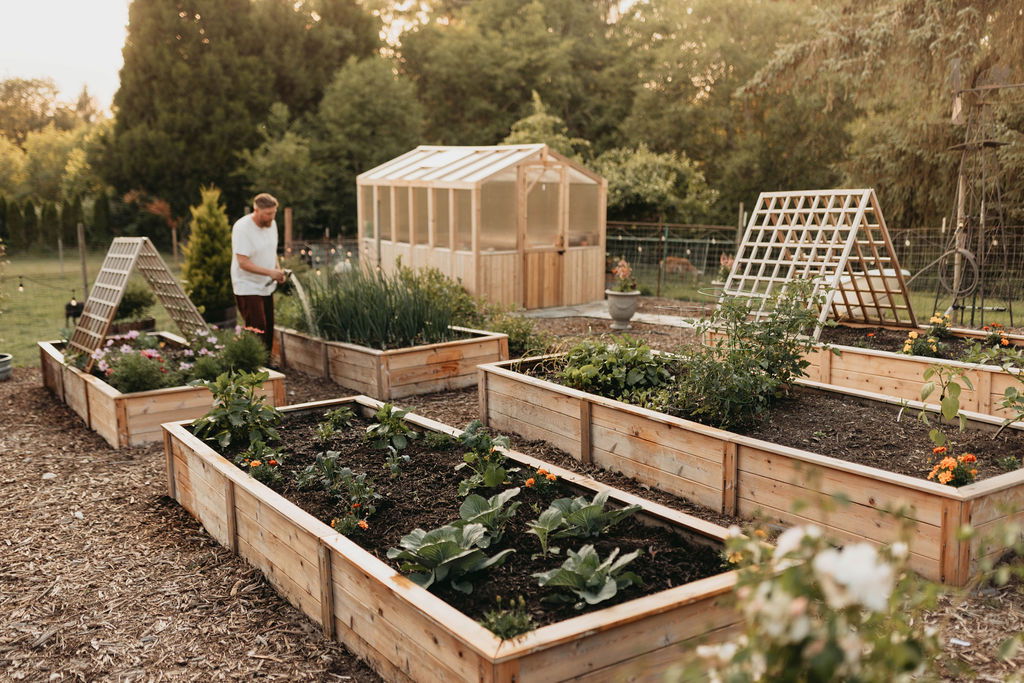
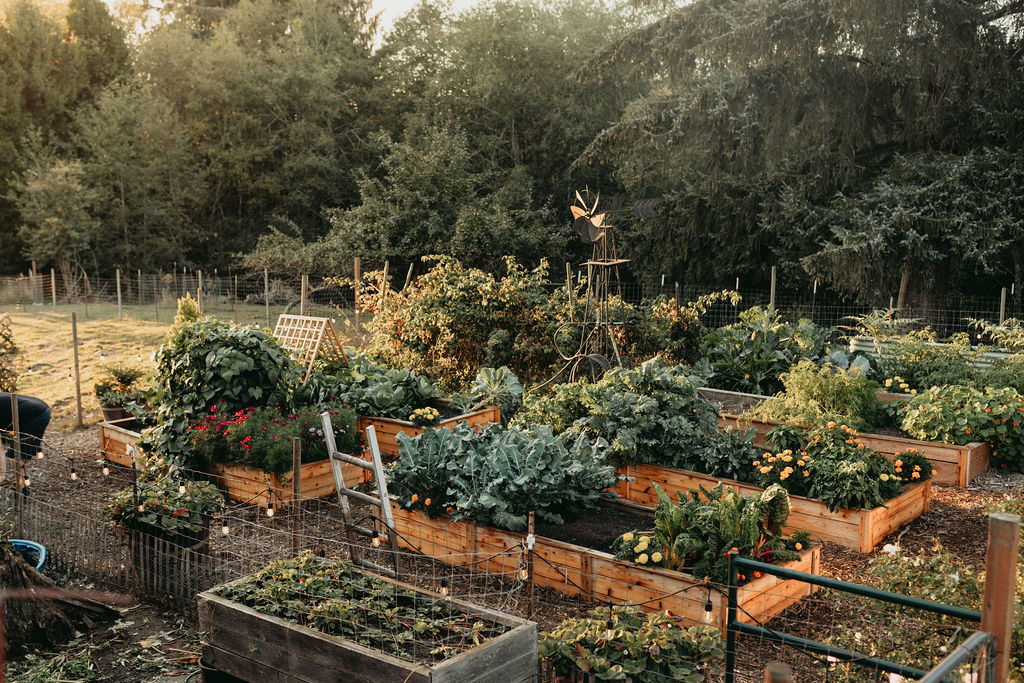
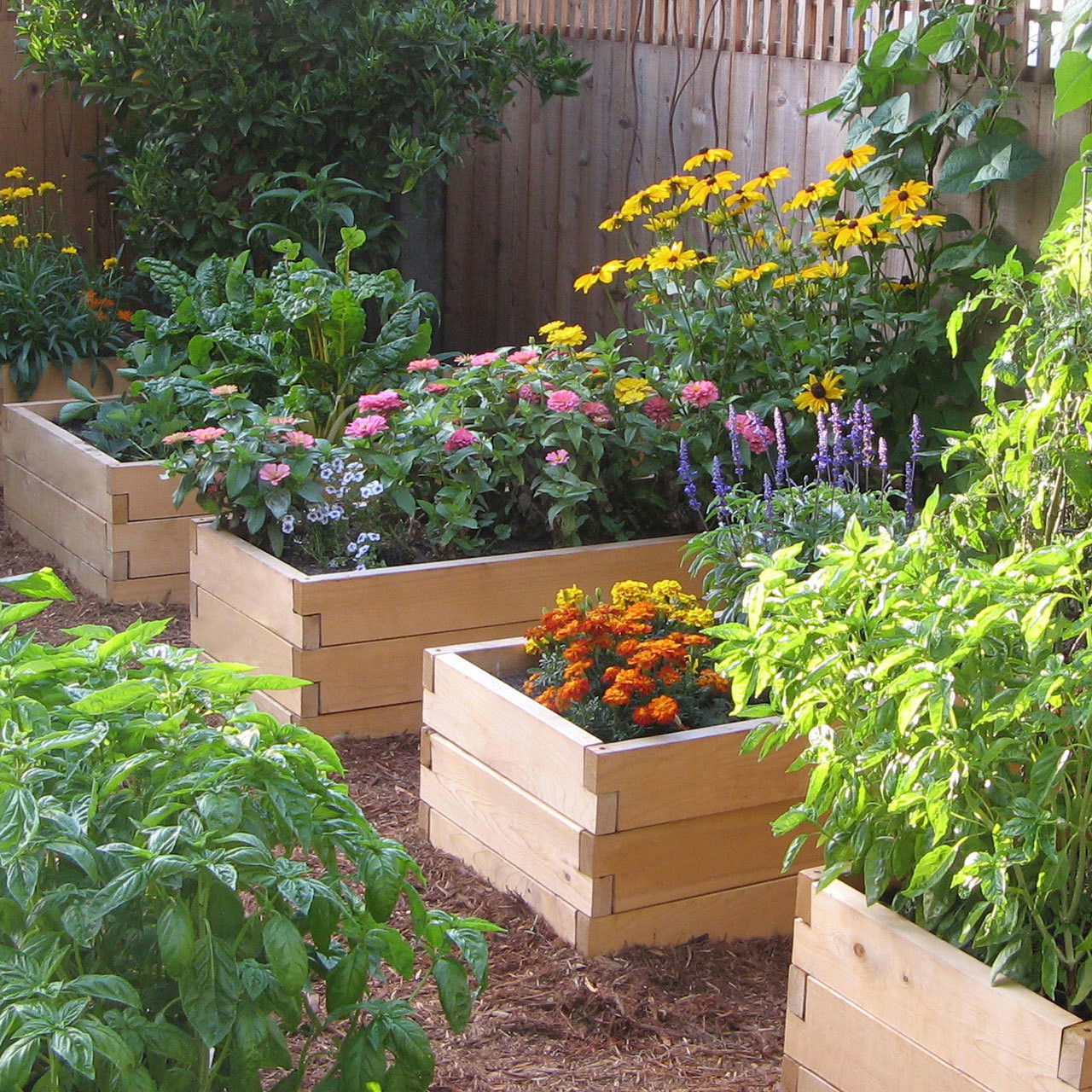
Companion planting is a time-tested gardening technique where specific vegetables, herbs and flowers are planted together to benefit each other's growth. By pairing compatible plants in your raised garden beds, you can naturally repel pests, attract beneficial pollinators, improve soil nutrients, enhance flavors and increase your overall harvest.
Key takeaways
- Plant known companions to help with pest control, pollination, soil fertility and crop yield, especially in confined spaces like raised beds.
- Use plants that attract pollinators, repel pests and fix nitrogen to maximize benefits.
- Avoid incompatible pairings to reduce problems.
- Keep in mind that companion planting is a tool – mix with good soil, crop rotation, and attentive gardening for best results.
What is companion planting? Why companion planting is especially useful in raised beds Companion planting goals & benefits How to plan companion planting in a raised bed Recommended companions: plants that work well together Sample raised bed layouts & companion schemes Combinations / pairings to avoid Caveats, limitations & what companion planting can't guarantee Best practices for success FAQ Conclusion & encouragement – companion planting as one tool in a balanced garden system
The idea of companion planting is a simple one: take two or more varieties known to grow well together and plant them in close proximity – then enjoy the results. But how do you know what works and what doesn’t?
This guide explains which plant combinations work well together and why, helping you maximize the productivity of your confined growing space while creating a healthier, more biodiverse garden ecosystem.
What is companion planting?
Have you ever heard the phrase ‘carrots love tomatoes’? That old saying refers to the idea that planting these two well-loved vegetables together will often increase the yield of both – making your plants happier, healthier and stronger.
Callout:
Understanding how companion plants work together can help you tackle some common gardening problems.
The idea that certain crops work symbiotically to increase yields has been around as long as gardeners. More recently, scientists have studied the phenomenon to try and determine what is actually taking place when plants thrive together. What they’ve discovered is that companion planting can work in the following ways:
- Protecting and shielding crops: More delicate plants can benefit from the presence of hardier varieties. These can provide protection from sun, wind and heavy rains when planted nearby.
- Improving pollination: Some plants with bold blooms, powerful fragrances, or other attractants can draw pollinating insects to plants in the same vicinity that also require pollination. When plants attract beneficial insects, it helps crops thrive.
- Trapping and luring pests: Planting varieties that attract pests away from the garden can lure pests away from prized plants. This is called “trap cropping.”
- Repelling pests: Many plants produce substances in their leaves and roots that naturally repel common pests.
-
Enriching the soil: Some plants introduce essential nutrients back into the soil as they break down or fix nitrogen from the atmosphere.
Why companion planting is especially useful in raised beds
The controlled nature of raised garden beds offers distinct advantages for companion planting:
- More control over soil composition, drainage, and amendments. This allows you to fine-tune conditions for specific plant combinations.
- Defined boundaries that make it easier to plan layouts, rotate crops and track which pairings work best in your space.
- Elevated soil that warms faster in spring and drains more efficiently. This creates ideal conditions for many companion planting schemes.
However, this confined space also means that incompatible plants can compete for nutrients, water and light. Without the buffering effect of a larger garden, poor pairings can lead to stunted growth or reduced yields.
As you read our recommendations below, keep in mind the unique factors that affect your garden. Here are some questions to ask before diving in:
- Are there particular pests you'd like to address?
- Does your soil have particular needs?
- Is your garden located in an area with wet weather or hot, drying sun that may affect the plants you hope to grow?
- Are you looking to solve issues in a greenhouse or polytunnel?
Knowing the problems you want to solve can help you target the best companion plants for your raised garden. New to raised bed gardening? The combinations below work best in a standard 4×4 or 4×8 ft bed. If you’re still choosing your bed, our raised garden beds guide covers everything from soil depth to sizing.
Companion planting goals & benefits
In addition to increasing the yield of your harvest, the benefits of companion planting include the following:
Less reliance on chemical pesticides
Companion planting is a form of integrated pest management that helps control pests without harmful chemicals.
Improved flavor
When sown in a vegetable bed, some aromatic herbs will improve the taste of certain vegetables making them great companions.
More biodiversity
Planting a mix of varieties together mimics the diversity found in nature. Avoiding monoculture means reducing the impacts from pests and diseases that prey on a single plant family. It also means providing a haven for the beneficial insects we want in the garden.
How to plan companion planting in a raised bed
Successful companion planting starts with thoughtful planning before you ever put a seed in the soil. Taking time to assess your space, understand your plants' needs and map out a strategic layout will set you up for a productive growing season.
Assess your growing conditions
- Begin by evaluating the physical characteristics of your raised bed.
- Measure the dimensions – length, width and depth – to understand how much growing space you have.
- Note the sunlight patterns throughout the day: does your bed receive full sun (6-8 hours), partial sun or shade?
- Observe drainage to identify any wet spots or areas that dry out quickly

Soil Test Kit
Understanding these baseline conditions helps you choose plants that will thrive together in your specific environment.
Understand plant characteristics and needs
Before selecting companions, research each plant's growing requirements and habits. In particular, consider soil depth. For example:
- Shallow-rooted lettuce planted with deep-rooted carrots minimizes competition for nutrients at different soil levels.
- Vining plants like cucumbers need room to spread or trellises to climb. Compact varieties like bush beans stay contained. In addition, tall plants can shade shorter neighbors.
- Heavy feeders like tomatoes and corn deplete soil nutrients quickly, while legumes add nitrogen back. Avoid grouping multiple heavy feeders together without nitrogen-fixing companions.
- Plants with similar moisture requirements work best together. Drought-tolerant herbs like rosemary won't thrive next to moisture-loving lettuce.
- Fast-growing radishes can be harvested before slower-growing carrots need the space, maximizing your bed's productivity.
Plan for timing and succession
Companion planting in raised beds isn't just about what grows together – it's also about when. For example, plant cool-season lettuce and peas in early spring. As temperatures rise and peas finish producing, the lettuce benefits from their shade. When both are harvested, replant with warm-season companions like tomatoes and basil.
Think about crop rotation even within a single growing season. Avoid planting the same family of vegetables in the same spot year after year, as this can deplete specific nutrients and increase pest and disease pressure. Keep records of what you planted where so you can rotate effectively.
Design your layout strategically
Sketch out your raised bed layout before planting taking into account these tips:
- Place tall plants like corn, tomatoes on stakes or trellised beans on the north side of your bed so they don't shade shorter plants. Arrange plants in descending height from north to south.
- Ensure you can reach all plants for harvesting, pruning and pest inspection without stepping on the bed.
- While companion planting maximizes space, avoid overcrowding. Plants still need adequate room for air circulation to prevent fungal diseases. Follow spacing guidelines but consider slightly tighter planting than traditional gardens.
- Use trellises, stakes and cages to grow vertically, freeing up ground space for companion plants below. Pole beans climbing corn stalks or cucumbers on a trellis with lettuce underneath are classic examples.
- Alternate rows or create clusters of companions. For instance, plant a row of carrots, then a row of onions, then carrots again—or create a cluster of three tomato plants surrounded by a ring of basil and marigolds.
Create a planting calendar
Develop a timeline for when to start seeds indoors, transplant seedlings and direct sow in your raised bed. Coordinate companion plants so they're ready to go into the ground at the same time or in succession. This prevents leaving gaps in your bed and ensures plants can support each other throughout their growth cycles.
Keep flexible and observe
Even the best-laid plans need adjustment. As your garden grows, observe how plants interact. Are some companions thriving while others struggle? Take notes throughout the season on what works and what doesn't in your specific conditions.

Recommended companions: plants that work well together
The following companion plantings can work well in almost any garden.
Which plants attract pollinators when grown in raised beds?
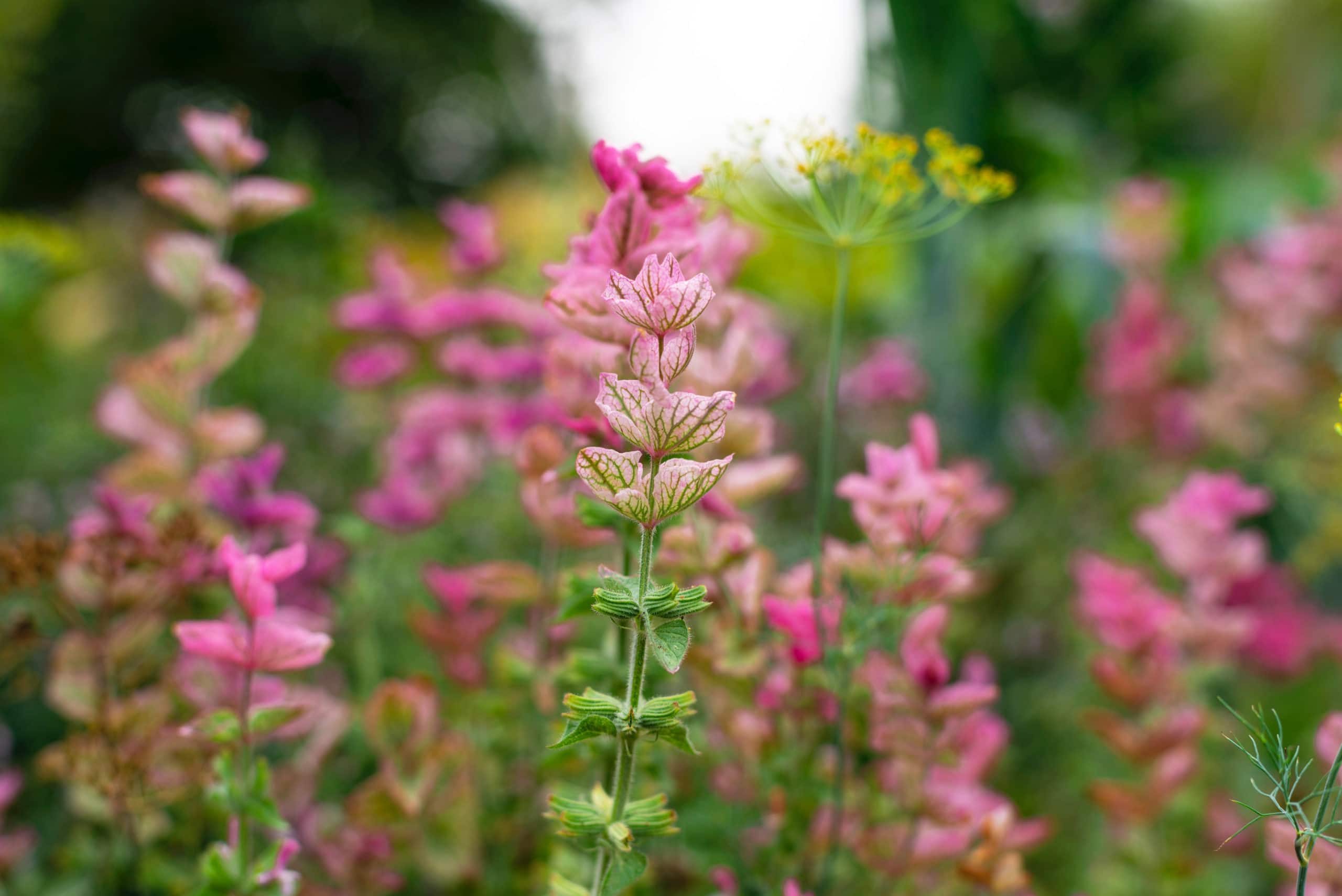
The following plants are known to attract pollinators to your vegetable garden. Plant nearby or adjacent to your fruit and vegetable beds for maximum benefit.


Callout:
Flowering native plants are often attractive to pollinators because they are familiar.
Including native plants in your mix is also important, since insects in your area will recognize these local plants and have a preference for them. Check with your local extension agent to find what native plants are recommended for your region. Then include these common favorites in the mix (making sure to let them flower):
| Agastache | Catmint | Dill |
| Alyssum | Calendula | Echinacea |
| Bee Balm | Clover | Parsley |
| Borage | Coriander | Sage |
| Buckwheat | Cosmos | Thyme |
Related:
- 5 Early Season Plants That Attract Pollinators to Your Garden
- Bees Guided By Flowers’ Electric Fields
Which herbs or companions help repel pests naturally?
Some plants produce compounds that suppress the growth and development of other organisms in the garden. This process is known as allelopathy. A well-known plant with allelopathic properties is the marigold, which is known to reduce the presence of harmful nematodes in the soil. According to The Centre for Agriculture, Food, and Development, marigolds must first be grown and tilled into the soil before planting if you want to get this benefit. Note: tilling marigolds into the soil is specifically for nematode control. Marigolds planted alongside crops in a raised bed still help deter other pests like cabbage maggots and whiteflies without being tilled in.
Other plants deter pests from munching on your crops simply because they smell or taste unfavorably. Examples include garlic, catnip and chives, which discourage Japanese beetles.
Here are some common favorites.
| Preferred Crop | Plants That Repel Pests |
|---|---|
| Tomatoes | Garlic, chives, and onions help to deter munching pests. Asparagus repels tomato nematodes. Borage repels tomato hornworm. Cilantro deters spider mites. |
| Cabbages, broccoli, kale (Brassica family) | Borage deters cabbage moth caterpillars. Garlic deters a multitude of pests due to its sulfur compounds. Cut mint spread around plants helps deter cabbage moths and aphids. Oregano used as mulch or interplanted serves the same purpose. Nasturtiums planted in an adjacent or nearby bed helps lure aphids away. Calendula produces a sticky substance that attracts and captures aphids. Marigolds deter cabbage maggots. Summer savory attracts honeybees and repels cabbage moths. |
| Potatoes | Catnip repels Colorado potato beetle. |
| Squash | Radishes planted in and around your squash plants will help repel a variety of pests including squash bugs. Gourds planted with sweet corn and beans will help deter squash vine borers. |
| Carrots | Clover planted in a carrot bed is said to repel wireworm. Basil, lettuce, nasturtium, and tansy are said to repel carrot rust fly. Members of the allium family (garlic, leeks, onions), along with some aromatic herbs (rosemary, sage) are also said to repel the rust fly. |
| Asparagus | Asparagus beetles dislike basil, calendula, nasturtium, parsley, tansy, and tomatoes. |
| Cucumbers | Onions and nasturtiums attract beneficial insects that will feed on cucumber beetles. |
Related:
What plant combinations improve flavor?
While this category is harder to test given its subjective nature, many gardeners swear by the following combinations including medicinal herbs, culinary herbs and other plants.

Handcrafted Seed Vault - Divided Wooden Box for Seed Storage
- Thyme or borage with strawberries
- Basil or cilantro planted in a tomato bed
- Chamomile with onions
- Chervil with radishes

What companion plants improve soil fertility?
Adding clover, peas or beans to any bed will help increase the nitrogen in your soil. That’s because these plants harbor bacteria in the nodules on their roots that help pull nitrogen from the atmosphere and convert it to a form useful to plants – both themselves and whatever else is planted near them.
Planting any of the following in a bed lacking nitrogen will improve this nutrient in the soil:
- Broad beans
- Bush beans
- Pole beans
- Clover
- Chick peas
- Snap, snow or shelling peas
Planting buckwheat in a bed helps to add calcium to the soil. This is especially important if tomatoes have resided in that bed the year before, since tomatoes are heavy feeders of calcium.
You can also plant root crops apart so they don’t compete for phosphorus
Related:
What plants provide shelter?
The following combinations of tall or vining plants and shade-loving plants can work together to provide improved growing conditions for both.
Lettuces and peas
Sow climbing peas early on a trellis oriented east-west. A cedar wall-mounted trellis works well here - it attaches to a fence or wall behind the bed and gives the peas a sturdy surface to climb.
On the north side of the trellis, sow lettuce seeds. In the early part of the season when the peas are small, the lettuce will receive sunshine to warm the soil and speed germination. Once the peas are up and thriving, the lettuce will benefit from their shade as summer advances and the heat of the day threatens.
Why this works: This combination extends your lettuce harvest and prevents premature bolting.
Broccoli and salad greens
Broccoli and salad greens
As above, this combination can help shade lettuces, spinach, arugula and other salad greens as summer advances and the large leaves of the broccoli plants expand to fill the space. Plant in alternating rows for the most benefit.
Why this works: broccoli grows tall and leafy while lettuces, spinach and arugula are low-growing and prefer cooler conditions. The broccoli acts as a natural umbrella that keeps the greens productive longer into the season.
Related:
How to Build a Bean Trellis for Raised Garden Beds
Sample raised bed layouts & companion schemes
Over many years of gardening, we’ve made some observations of our own. Some of our favorites for pairings for raised garden beds include:
Tomatoes + onions/garlic + basil

Tomatoes are deep-rooted and need at least 18–24” of soil depth - a Farmstead raised bed at 24” works well if you’re growing on a patio or hard surface.
Cabbage + radishes + marigolds

Radishes and marigolds planted with cabbages help control the cabbage maggots that commonly attack cabbage plant roots. Add some chives to this bed if you have a slug problem.
Lettuce + carrots + chives

Lettuce planted in and around carrots is known to repel carrot rust flies. Chives deter aphids and flea beetles from sucking the life out of your lettuce. They also help repel the carrot rust fly.
Squash + runner beans + corn

An old favorite known as the Three Sisters, this combination is a win-win-win. Squash benefits from interplanting with corn and beans, which deter common squash pests. Raccoons dislike the prickly squash vines, and will avoid them while leaving your corn alone. Runner beans flower, attracting pollinating insects to your squash, which need pollination to bear fruit. And finally, the corn acts as a natural trellis for those vining beans.
The Three Sisters work best in a large bed - a 4×8 ft footprint at minimum. Corn needs room to anchor its roots, so aim for at least 16” of soil depth, and 24” if you’re growing on concrete or gravel.
Kale + bush beans + beets

Another way of pairing plants is to consider which levels of the soil profile they occupy. While beets feed deeply in your garden, bush beans and kale have shallower roots and won’t present the same competition for nutrients as another root crop. They also add essential nutrients back to the soil and are harvested more quickly than beets. Be careful not to plant pole beans with beets, however, since these are known to be incompatible.
Combinations / pairings to avoid
In some cases, particular plants sown in close proximity will affect each other negatively. While the research on this is still developing, some common garden enemies identified by gardeners include:
- Garlic (and other alliums) with beans and peas
- Carrots with dill and other members of this family
- Cucumbers and fragrant herbs
- Spinach and potatoes
- Beets and pole beans
Caveats, limitations & what companion planting can't guarantee
Companion planting is a valuable gardening tool, but it's important to understand its limitations. While strategic plant pairings can improve your garden's health and productivity, companion planting isn't a magic solution that guarantees perfect results.
Scientific evidence varies
Much traditional companion planting knowledge comes from generations of gardeners sharing observations. While many practices are based on sound ecological principles, scientific research is still developing. Some claims – like marigolds reducing soil nematodes or legumes fixing nitrogen – are well-supported by research. Others rely more on anecdotal evidence. This doesn't mean these pairings don't work, but their effectiveness may vary depending on numerous factors.
Results depend on local conditions
What works beautifully in one garden may disappoint in another. Success is influenced by climate and weather patterns, soil health, local pest and disease pressure, and even microclimates within your garden. A pairing that thrives in cool, moist conditions may struggle in hot, dry summers. If your area experiences severe pest infestations, companion plants alone may not provide sufficient protection.
Timing and other factors matter
The benefits of companion planting often depend on both plants being at the right growth stage simultaneously. Pest-repelling herbs won't help if they haven't matured when pests attack. Nitrogen-fixing legumes need time to establish before enriching soil for neighbors.
Environmental factors beyond your control
Extreme weather, unseasonable temperatures, unexpected pest outbreaks or disease introductions can overwhelm even the best companion planting schemes. Sometimes, despite perfect planning and compatible pairings, circumstances beyond your control will affect your harvest.
Companion planting won't replace good practices
Think of companion planting as one layer of a holistic approach, not a substitute for fundamental care. You still need to maintain soil health with compost and amendments, water, practice crop rotation, monitor for problems and provide adequate space and light. Even compatible companions will struggle if overcrowded or stressed by poor growing conditions.
Best practices for success FAQ
How close do companion plants need to be to benefit each other?
Generally, plants should be within the same bed or within a few feet of each other. For pest control, aromatic herbs work best when planted directly among vegetables. For pollinator attraction, flowering companions can be effective even at the bed's edge.
Do I need to plant companions at the same time?
Not necessarily. Some companions work well when planted in succession – for example, planting fast-maturing radishes with slower carrots. However, for pest control benefits, timing matters more since both plants need to be actively growing together.
What if my companion plants grow at very different rates?
This can be beneficial! Fast-growing crops like lettuce or radishes can be harvested before slower companions need the space. Ensure the quick growers don't shade or crowd out slower plants during critical early growth stages.
How do I know which plants are "heavy feeders" vs. "light feeders"?
Heavy feeders (tomatoes, corn, squash, brassicas) require rich soil and regular fertilizing. Light feeders (herbs, root vegetables, beans) need less. Research each plant's needs or check seed packets, which often indicate nutrient requirements.
My companion plants aren't preventing pests. What am I doing wrong?
Companion planting reduces pest pressure but doesn't guarantee elimination. Make sure you have enough companion plants (not just one or two), that they're mature enough to be effective, and that you're addressing other factors like plant health and watering.
How long does it take to see benefits from companion planting?
Some benefits appear quickly – pollinator-attracting flowers work within days of blooming. Others take longer – nitrogen-fixing legumes need several weeks to establish, and soil improvement happens over seasons. Pest control effects vary depending on the specific pairing and pest life cycles.
What's the single best companion planting combination for beginners?
Tomatoes with basil and marigolds are hard to beat. It's simple, well-tested, addresses common tomato pests, attracts pollinators, and the basil is ready to harvest with your tomatoes for cooking. Plus, all three plants have similar water and sun requirements.
What should I not plant together in a raised bed?
Avoid planting garlic or onions near beans and peas - alliums stunt their growth. Keep carrots away from dill, and don’t plant cucumbers near fragrant herbs like sage or oregano.
What is the best companion plant for tomatoes in a raised bed?
Basil and garlic are the most popular companions for tomatoes. Basil is said to improve flavour and deter some insects, while garlic repels aphids, slugs, and other common pests.
How many plants can I fit in a 4×4 raised bed with companion planting?
It depends on the crops, but a 4×4 bed typically fits 1–2 tomato plants with herbs tucked around them, or a full bed of lettuce and carrots with chives at the edges. Most vegetable plants need 12–18” of space, so avoid overcrowding.
Companion planting as one tool in a balanced garden system
Whichever pairings you choose for your raised garden beds, make notes throughout the season on how it’s working in your unique space, under your garden’s specific set of conditions. If something isn’t working as well as it should, adjust as necessary with the knowledge that you’re taking part in an age-old practice. Happy planting!
Ready to put these combinations to work? Browse our raised garden beds to find the right size and height for your garden. And if you’re planning which crops to grow, our guide to raised bed soil depth requirements will help you match your plants’ root needs to the right bed height.