


Pick a pest and you can usually find a natural control for it. Yet each year North American homes use approximately 136 million pounds of pesticides on lawns and gardens, and in the home.
In fact, homeowners use about three times the amount of pesticides as farmers. Most wildlife pest poisonings, and most surface water contamination from pesticides come from single-family homes.
For safety information about common pesticides, see the Audubon Pesticide Chart.

Prevention
The easiest way to prevent insect damage in your garden is to discourage them from coming in the first place. A healthy garden is the best defense.
Pull out weak plants
They may already be infected. If not, they will attract predators. Pull the plant and dispose of it away from the garden area.
Build healthy, organic soil
Natural composting methods, mulching, and top-dressing your soil with compost or natural fertilizer is the best way to develop strong, vigorous plants. Read more about How to Build and Nourish Healthy Garden Soil.
Minimize disturbance
Practising no-dig or no-till gardening will help minimize the introduction of pests to the soil and increase the beneficial microbes.
Use seaweed mulch or spray
Seaweed contains trace elements such as iron, zinc, barium, calcium, sulphur, and magnesium, which promote healthy development in plants. Seaweed fertilizer in mulch or spray form will enhance growth and give plants the strength to withstand disease. Seaweed mulch also repels slugs.
Minimize insect habitat
Clear your garden area of debris and weeds, which are breeding places for insects. Use clean mulch.
Interplant and rotate crops
Insect pests are often plant specific. When plantings are mixed, pests are less likely to spread throughout a crop. Rotating crops each year is a common method to avoid re-infestation of pests that have over-wintered in the bed.
Keep foliage dry
Water early so foliage will be dry for most of the day. Wet foliage encourages insect and fungal damage to your plants. See our page on drip-irrigation for methods of delivering water to the root systems without wetting the foliage.
Disinfect
If you’ve been working with infested plants, clean your tools before moving on to other garden areas. This will reduce the speed of invading insects.
Avoid uncertified transplants
When we move plants from one garden to another, we can also transport pests and disease. Be sure to purchase plants and soil amendments from a trusted source to ensure any introductions are clean and disease (and pest) free.
Encourage snakes
While snakes may not be everyone’s favorite visitor, garden snakes help control small rodents, slugs, grasshopppers, and more. Learn about the beneficial snakes in your area and do what you can to increase their habitat in and around your garden. For more information, read These 3 Snakes Are Your Garden’s Best Friends.

Beneficial insects
Beneficial insects are insects that you can attract to your garden or buy from catalogues that prey on harmful insects or their larvae. There are many different species for specific problems, and more information is available at several of the links listed on this page.
Brachonids, chalcids and ichneumon wasps
These small beneficial insects destroy leaf-eating caterpillars. You can attract them to your garden by planting carrots, celery, parsley, caraway and Queen Anne’s lace, all members of the Umbelliferae family. These plants are easy to grow, and some should be left to flower. It’s the flower that attracts the insects.
Ladybugs
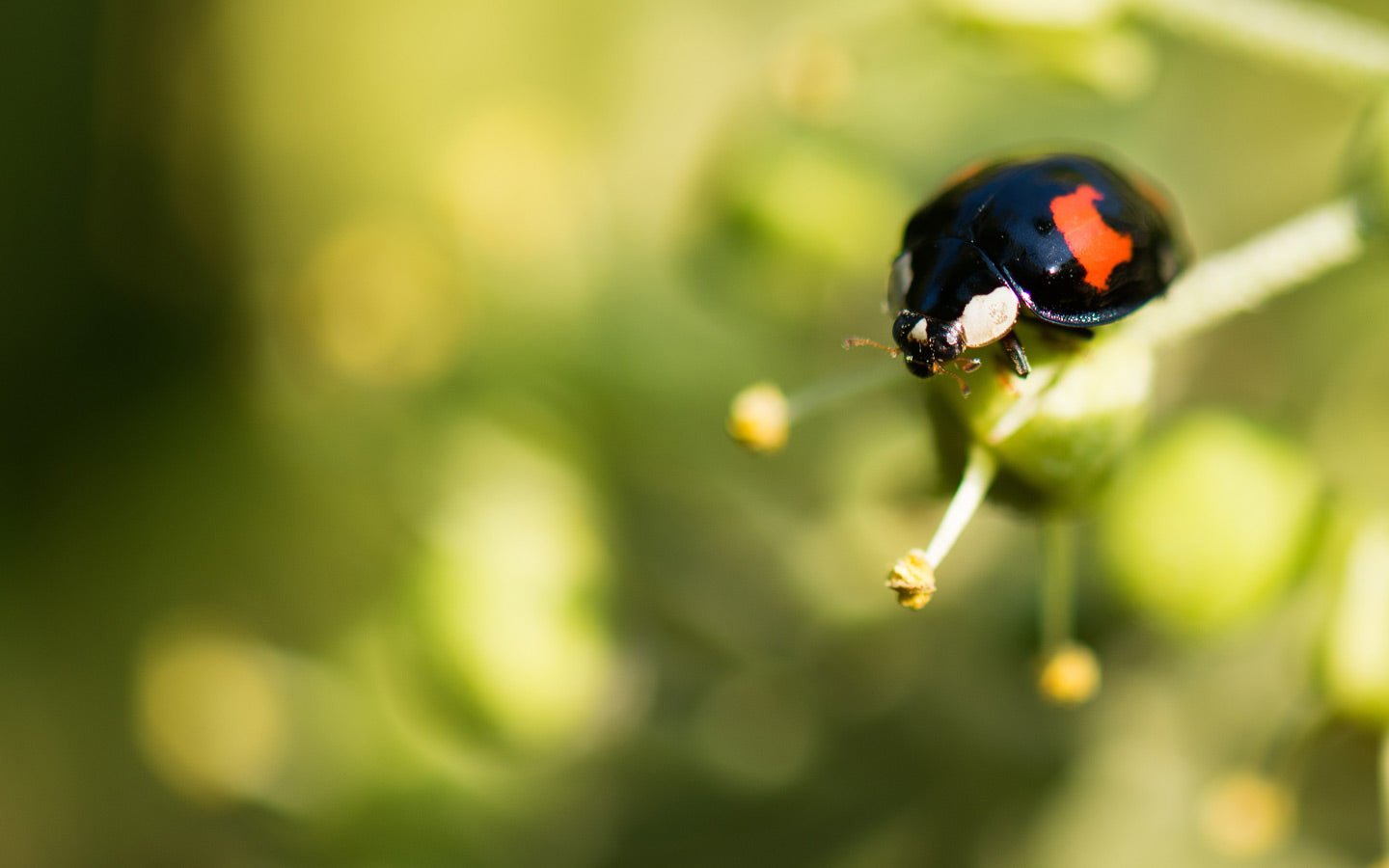
These common insects consume aphids, mites, whiteflies, and scale. Planting members of the daisy family (Compositae), tansy, or yarrow will attract them to your garden. Ladybugs are also available from online catalogue.
Lacewings
Lacewings are avid consumers of aphids, and their larvae eat aphids and other varieties of other insect pests. They are attracted to “composite” flowers, such as yarrow, goldenrod, black-eyed Susans, and asters. Lacewings can also be purchased online at the sources listed below and released directly into your garden.
Hover-flies
Hover-flies are avid consumers of aphids, and the larvae of hover-flies eat aphids and other insect pests. Like the Lacewings, they are attracted to “composite” flowers, such as yarrow, goldenrod, black-eyed Susans and asters. Seeds for these flowers are available online or at most garden centers.
Praying mantis
These large insects have an appetite for most garden pests. Praying mantis eggs are set out in the garden where they hatch and quickly grow to adult size. The eggs are available through mail order and online catalogues.
Nematodes
Nematodes are effective against cutworms, a common pest that destroys sprouts before they can grow into seedlings. Nematodes are also effective against beetles and root weevil larvae.
Nematode eggs are microscopic and come in a small sponge a million at a time. These are mixed with water and applied to the soil, where they hatch and go to work. If they get on foliage, wash them off to the ground.
Nematodes are harmless to humans and pets. They are available in some garden centers, through mail-order catalogues, and at the businesses linked below.
TIP: Create your own garden 'mini insectary'
You can set aside a small garden plot of flowering plants designed to attract and harbor beneficial insects. These ‘good’ insects prey on many common garden insect pests and offer the gardener a safer, natural alternative to pesticides. Read our guide for more information about creating a Garden Mini Insectary.

Non-toxic homemade remedies for common garden pests
Homemade remedies are inexpensive and, best of all, you know what’s going into your garden. Many homemade sprays have been used with good results to control harmful insects. They usually involve noxious (but non-toxic) ingredients such as garlic, cayenne, stinging nettles, or horsetail, which are diluted in water and blended to be sprayed on the plants. Here are a few simple formulas:
Soft-bodied insects (mites, aphids, mealy bugs)
Mix one tablespoon of canola oil and a few drops of Ivory soap into a quart of water. Shake well and pour into a spray bottle. Spray plants from above down, and from below up to get the underside of the leaves. The oil smothers the insects.

Grubs
For lawn or garden grubs, there is a natural, effective remedy called milky spore. The granules are spread on the soil and cause the grubs to contract a disease that kills them. This natural control affects only the grubs, leaving the beneficial organisms unharmed. Milky spore multiplies over time and will sit inactive, waiting for grubs to infect. One treatment is said to last 40 years. The grubs are actually the larvae of Japanese beetles. So, when you kill the grubs you kill the beetle.

Milky Spore Powder Japanese Beetle Control - 10 oz
Mites and other insects
Mix two tablespoons of hot pepper sauce or cayenne pepper with a few drops of Ivory soap into a quart of water. Let stand overnight, then stir and pour into a spray bottle and apply as above. Shake container frequently during application.
Earwigs, slugs, and other soft-bodied garden pests
Sprinkle diatomaceous earth over plants and around edges of garden beds. The diatoms particles are very small and sharp – but only harmful to the small exoskeletons of insects, slugs and snails. Insects cannot become immune to its action, as it is a mechanical killer – not a chemical one. Read more about Diatomaceous Earth: Non-toxic Pest Control for Your Home and Garden.
For more information about nontoxic slug and snail control, read our article Natural Slug Control.

Food Grade Diatomaceous Earth - 4lb
Natural powder that kills crawling insects by drying them out — safe for indoor and garden use, chemical-free, long-lasting pest control.
Wireworms
Use potato slices as bait to help clear the soil of wireworms before planting. Simply place potato slices in your garden on the soil surface: the potatoes will draw out the wireworms, which you can remove along with the potatoes.
Fungal diseases
Mix two tablespoons of baking soda into a gallon of water. Pour into a spray container and spray affected areas. Repeat this process every few days until problem ceases.
Powdery mildew
Mix equal parts milk and water and spray on infected plants. Three treatments a week apart should control the disease. Neem oil spray can also be quite effective against powdery mildew.
Insects and fungal diseases
Combine one tablespoon of cooking oil, two tablespoons of baking soda, and a few drops of Ivory soap into a gallon of water. Pour into a spray container and apply as above.
Insects on fruit trees
Lime sulfur and dormant oil, available at nurseries and garden centers, can be sprayed on the trunk and branches of dormant fruit trees. This concoction will suffocate insect egg cases. Because the oily spray is heavy compared to the other water-based sprays, you’ll need a pump sprayer. These are fairly inexpensive and are available to rent from some nurseries. Only use this method while the tree is dormant, however, or it can kill the tree.
Commercial dormant oils may contain petroleum oil or kerosene. A less toxic method is to make your own. Mix 1 cup of vegetable oil and 2 tbsp of liquid soap in one gallon (4 liters) water. Mix the soap and oil first, then add the water. Shake often during use.
CAUTION: Sprays that kill harmful insects will also kill beneficial insects. Use these homemade remedies selectively, only spraying the infected plants. Apply them early in the morning or just before dark. Re-apply after a rain. Wear protective clothing when spraying insecticides. For more information, read How to Understand Labels on Natural and Chemical Pesticides.

Other natural controls for common insect pests
To address insect pests more broadly, consider using Arber’s Insecticide to prevent insect and mite build up. This unique formulation uses good bacteria (will not target beneficial insects and pollinators) to help your plants thrive free from pests. It is effective against plant bugs and soil-dwelling pests both indoor and outdoors, and can be used as a spray or soil treatment.
Aphids
Increase plant diversity around your garden to attract aphid predators. This includes planting pollen and nectar-rich varieties in and around your garden or locating your garden next to natural landscapes where these plants thrive. Ensure you’re planting seeds and transplants into healthy soil without excessive nitrogen, and remove struggling or weak plants as the season advances. If aphids do move in, consider purchasing beneficial insects like the Aphidoletes midge and Aphidus wasp to take care of any infestation. Read more about aphid control in our article, An Abundance of Aphids.
Carrot rust fly
Monitor carrot rust fly arrival using yellow sticky cards. Delay your planting until after the first generation of rust fly has passed. After planting your crop, watch the sticky cards for signs of the adult rust fly. When they appear, cover your carrot row with floating row covers. For more details, read Carrot Rust Fly: Combat This Carrot Killer Using a Few Simple Tricks.
Cabbage maggots
After transplanting seedlings into the garden (or after seedlings emerge), monitor the garden bed for the presence of adult flies using yellow sticky cards. If you detect adults, check the base of your plants for maggots and remove as soon as possible. If plants wilt, check for damage and remove maggots (if damage is minimal) and plants (if damage is more extensive). Do not compost. You can also use paper collars if growing a few plants, plant later in the season to avoid the insect’s peak, encourage beneficial predators like ground and rove beetles, or use floating row covers before adults arrive. For more details, read Chaos in the Cole Crops: How to Control Cabbage Maggots. Or learn about how to limit maggots in compost.

Mosquito Dunks
Natural BTI-based larvicide that kills mosquito larvae in standing water within hours and keeps working for ~30 days. Safe for people, pets, birds, and wildlife.
Cutworms
Encourage beneficial insects to inhabit your garden by planting and encouraging nearby companion plants. You can also buy beneficial nematodes that prey on cutworms, use plant collars made from recycled plastic containers, and eliminate alternate hosts that may keep these pests thriving nearby. For more details, read How to Control Cutworms in Your Garden.
Japanese beetles
Apply the bacteria B. popilliae, otherwise known as milky spore, when the soils have warmed to 65 degrees Fahrenheit or greater. Apply one teaspoon to your lawn or garden every four feet, in rows four feet apart, then water into the soil. The milky spore powder attacks Japanese beetle grubs and will be effective in the soil for approximately 10 years. For more details, read our article Milky Spore Controls Japanese Beetles in the Yard and Garden.
Spider mites
If you are gardening in a greenhouse, keep the humidity level high, above 65%. If possible, keep temperatures below 80 degrees Fahrenheit. Remove established infestations by washing plants with soapy water every two days for ten days, focusing on the undersides of plant leaves. You can also purchase populations of Feltiella acarisuga, a beneficial insect that will attack and eat spider mites and their eggs. Read more in our article, Spider Mites: How to Identify and Control Them Naturally.

Traps and Barriers
Yellow flypaper
Old-fashioned flypaper is very effective in the garden for aphids and whiteflies. In fact, any board or heavy paper painted yellow and coated with a sticky substance will do the job.
Apple maggot traps
The apple maggot is the most destructive pest of apples grown in home orchards. This insect is a type of fly that pierces the skin of ripening fruit and lays eggs. In 5 – 10 days, the eggs hatch a maggot that burrows through the fruit. These pests can be managed by using sticky red sphere traps. Hang one trap for every 100 apples in a tree. Click for more information, or to buy apple maggot traps.
Pheromones
These biological mating scents attract insects to a trap that is coated with a sticky substance. Pheromone traps are effective, but remember they are “attracting” the insects – be sure to position them on your garden perimeter or you’ll attract outside pests into your garden! Available at larger garden centers, usually in the $5 – $15 range.
Floating row covers
Floating row covers consist of lightweight opaque material, which is draped over the garden bed. Sunlight and water go through, but insects and birds are kept out. The material is so light that the growing plants simply push it up as they grow. The edges of the row cover need to be anchored with rocks or boards or the wind will lift it. The material is “spun,” which resists tearing, but it usually begins to break down after a few years. It’s also nest fodder for mice, so be sure to hang over the winter or store in a rodent-proof container. Row cover material comes in rolls so you can make a continuous cover no matter how long the garden bed.
Row covers are great for protecting seedlings. They are even more useful throughout the growing season when placed over vegetables such as carrots, beets, broccoli, Swiss chard, and spinach because they makes an effective barrier against flying insects looking for these plants to lay their eggs on.
Cloches
A cloche is like a miniature greenhouse for your seedbeds and young plants, and acts as a barrier against pests. Unlike the floating row cover, however, the cloche has to be opened on hot days and for watering, and this presents an opportunity for pests to find the plants. But because the cloche helps seedlings and young plants get well established, the enhanced natural resistance of stronger healthy plants is the best defence against pests and disease. Click here for more info or for plans to build your own portable garden cloche.
Barrier paper
Scraps of waxed cardboard from milk cartons are a simple yet effective defence against cabbage moths. Cabbage moth larvae kill young sprouts of the Brassica family (broccoli, cabbage, Brussels sprouts, kale or cauliflower).
Cut into 2″ squares and slit one side into the center; make another small slit crossways. Open the slit and slide the square so the seedling stem is in the center. This prevents the cabbage moth from laying eggs at the base of the sprouts. Leave in place – as the plant grows it will simply push the slit open wider. Be sure to apply as soon as the sprout appears, or the moth will beat you to it!
Deer control
The average deer eats about five pounds of greenery each day. Creatures of habit, they revisit the same forage areas often. The following non-toxic recipes will deter the deer, but may need to be re-applied after a heavy rain.

Mix one whole egg with a quarter cup of water and mix well. Pour the mixture into a pump bottle and spray it on your plants. This deterrent will withstand light rains because the egg sticks to the leaves.
Mix one tablespoon of liquid dish detergent with one ounce of hot sauce in one litre of water and spray directly on plants which deer have been nibbling.
For larger volume applications, mix the following ingredients:
- 1 cup milk
- 2 gallons water (8 liters)
- 2 whole eggs
- 2 T cooking oil
- 2 T liquid detergent
Pour the mixture into a pump bottle and spray it on your plants.
Eventually, even the most persistent deer will become discouraged and look elsewhere for forage. Once they’re in the habit of feeding elsewhere, you may be able to let up on the spraying regimen.
For more information on deer control, read How to Keep Deer Out of Your Garden.
Site visitors offer these suggestions for nontoxic deer control:
“Hang a bar of fragrant soap from a middle branch of a bush to keep deer from eating the leaves. They don’t like the smell. The rain and humidity keeps the soap fragrant.”– Wendy
“Human hair stuffed into a small cheesecloth sack and hung in trees will repel deer. This is useful in a small orchard.”– Anthony

Rodent control
First, secure any open food sources, especially the compost bin. Sealed compost bins, such as compost tumblers, are recommended if you have rodents in your garden. As a deterrent, soak a rag or cotton balls in oil of peppermint (found at most health food stores), and place in areas of rodent activity. Place under an eve or under a cover that will keep the rain from diluting the peppermint. Rodents are allergic to peppermint and will avoid it. This method is also effective at deterring rabbits.
Mole control
Organic mole repellent is now commercially available for area-specific mole control. You can also work preventatively, improving soil drainage to deter moisture-loving moles and reducing the amount of water you use in your yard and garden. Wire or metal barriers installed around key plants will also deter moles. Additionally, promote natural predators such as snakes, hawks, and owls by creating their ideal habitat.
For more details on animal invaders, read our article How to Keep Animal Pests Out of Your Garden
Related Guides:
Nontoxic Slug Control
Nontoxic Wasp Control
Nontoxic Flea Control
Natural Insect Pest Control
Share This Article:
For a full range of natural non-toxic pest control products, visit our online store