


Slugs are in every garden, and cause more damage than most garden invaders. Commercial slug killers are available, but they can be toxic to birds and other wildlife, and are less effective after rain, when slugs are most active.
We have found that non-toxic, food grade Diatomaceous Earth (Insect Dust) is effective for slugs, but there are also many other methods available for little to no cost. Before reaching for the pesticides, read on to learn about natural, non-toxic methods of slug control—your garden will thank you.

Food Grade Diatomaceous Earth - 4lb

Slug Species of North America
Most species of slugs eat organic materials, including leaves, lichens, decaying plant material, and mushrooms. A few are predators that eat other slugs, snails, or even earthworms. Most slugs, however, aren’t native to North America and were accidentally introduced, which is why there are so many varieties of this prolific garden pest. Some slugs eat other slugs, but because many predatory slugs also eat plants, it’s difficult to think of any slug as beneficial. Here’s what you need to know:
Predator Slugs
- Philomycidae and Ariolimacidae families: Eats slime molds and mushrooms including milk-caps, oyster mushrooms, and penny bun.
- Testacella or ‘shelled slugs’ and Selenochlamys ysbryda: Eats earthworms.
- Rosy wolf snail or Euglandia rosea: Eats snails and tree snails.
Plant-Eating Slugs
- Ariolimax columbianus or Pacific Banana slug: The only of the three largest plant-eating slugs that are native to North America. While they can damage some woodland garden plants, banana slugs prefer moist, decaying matter and are generally not a pest in open areas or urban gardens.
- Limax maximus or Giant Garden Slug: This slug is fast and eats both plants and other slugs.
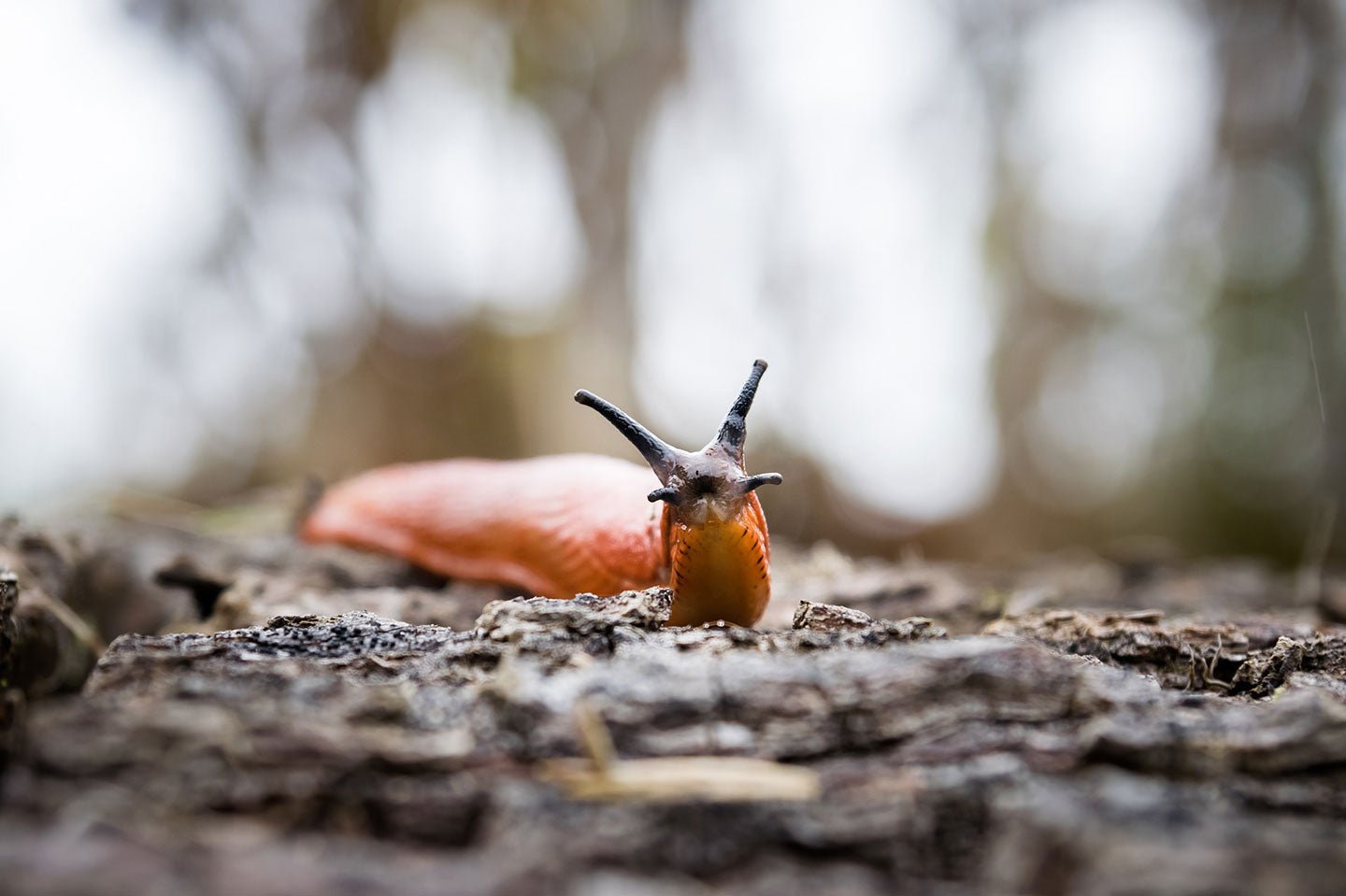
- Arion rufus or European Black Slug: It will attack all of your garden plants.

Natural, Non-Toxic Slug Control for Your Garden
Border Control
Copper
Small strips of copper can be placed around flowerpots or raised beds as obstructions for slugs to crawl over. Cut 2″ strips of thin copper and wrap around the lower part of flower pots, like a ribbon. Or set the strips in the soil on edge, making a “fence” for the slugs to climb. Check to make sure no vegetation hangs over the copper, which might provide a ‘bridge’ for the slugs. Copper barriers also work well around wood barrels used as planters.
You can also twist a thin copper wire around the base of a plant about 2″ up from the ground. The ends are crossed over, but only twisted part way, just enough to stay in place. As the plant grows the copper will expand gradually. Sometimes the wire drops to the base, but it’s easy to just slide it up and tighten.
A more convenient option is the non-toxic copper-based metallic mesh called Slug Shield, which can be wrapped around the stem of plants and acts as a barrier to slugs. When slugs come in contact with the mesh they receive an electric-like shock. The mesh also serves as a physical barrier. These slug shields are reusable, long lasting and weatherproof.
Electronic “Slug Fence”
An electronic slug fence is a non-toxic, safe method for keeping slugs out of garden or flowerbeds. The fence provides a ribbon-like barrier that usually runs off a nine-volt battery. When a slug or snail comes in contact with the fence, it receives a mild static sensation that is undetectable to animals and humans. This does not kill the slug, it cause it to look elsewhere for forage. The battery will power the fence for about 8 months before needing to be replaced. Extension kits are available for increased coverage. The electronic fence will repel slugs and snails, but is harmless to people and pets.
Lava Rock
Like diatomaceous earth, slugs will avoid the abrasive surface of lava rock. Lava rock can be used as a barrier around plantings, but should be left mostly above soil level, otherwise dirt or vegetation soon forms a bridge for slugs to cross.
Beneficial Predators
Nematodes
One of the fastest and easiest ways to get rid of slugs for up to six weeks is with microscopic parasitic worms called nematodes. They are watered into the soil with a special bacterium that lives in symbiosis with the nematodes and acts as food for them. The nematodes will then do the work for you by actively hunting out their slug prey. Within three to five days the slugs will swell and begin to die. The one downside to this method is that it can sometimes work a little too well – if all the slugs die, then slug predators will leave for better hunting grounds, creating the perfect scenario for an overabundance of slugs again.
Ducks
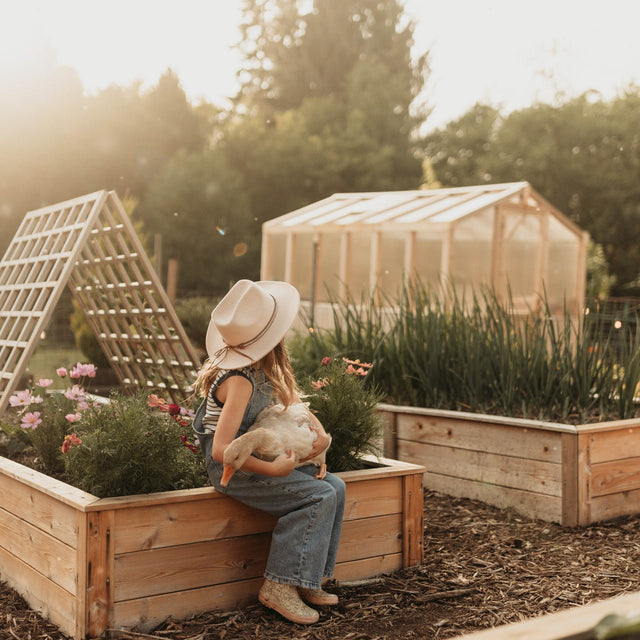
Ducks are natural-born slug predators, especially the more carnivorous Khaki Campbell or Indian Runner breeds. They will trample and eat some of your garden vegetables however, so the best way to use ducks is to allow them to forage in the garden in the early spring before planting, and then keep them penned around the perimeter. It only takes a few ducks per every 500-1,000 feet.
Frogs and Toads
Both frogs and toads love to eat slugs, so if possible, locate your garden near their preferred habitat. Frogs need a pond to live happily, but toads do not if they have enough dark moist hiding places.
Beetles
Carab and rove beetles are very good at eating slug eggs and baby slugs. You can encourage these beetles by creating homes for them by turning a plastic box upside down over a pile of straw with a small pile of rocks inside to hide in or a pile of rocks under some overhanging plants.

Soil Treatments
Seaweed
If you have access to seaweed, it’s well worth the effort to gather some. Seaweed is not only a good soil amendment for the garden, it’s a natural repellent for slugs. Mulch with seaweed around the base of plants or perimeter of bed. Pile it on 3″ to 4″ thick – when it dries it will shrink to just an inch or so deep. Seaweed is salty and slugs avoid salt. Push the seaweed away from plant stems so it’s not in direct contact. During hot weather, seaweed will dry and become very rough which also deters the slugs.
Diatomaceous Earth
Diatomaceous earth (also known as “Insect Dust”) comes in the form of a chalky dust and is the fossilized skeletal remains of microscopic creatures. It’s sharp edges lacerate soft-bodied pests, causing them to dehydrate. A powdery granular material, it can be sprinkled around garden beds or individual plants to effectively deter earwigs, slugs, and other garden pests. You can also mix it with water to make a foliar spray.
Diatomaceous earth is less effective when wet, so use during dry weather and reapply after it rains. Wear protective gear when applying, as it can irritate eyes and lungs. Be sure to buy natural or Food Grade Diatomaceous Earth, not pool grade, which has smoother edges and is far less effective. More information on Diatomaceous Earth.
Bran
Wheat or corn bran is a dessicant that will cause slugs to swell up and die when consumed. Sprinkle it around plants in your vegetable and flower beds and monitor to see if slugs are snacking. If your brand seems too coarse for slugs to eat, blend it in your food processor until a finer grain. Like many other soil treatments, bran needs to be reapplied after a heavy rain, but the beauty of this treatment? It’s inexpensive and non-toxic to humans. You can also purchase bran in bulk at most feed stores.
Coffee Grounds and Caffeine-Based Slug/Snail Poisons
Coffee grounds scattered on top of the soil will deter slugs. The horticultural side effects of using strong grounds such as espresso on the garden, however, are less certain. When using coffee grounds, moderation is advised.
A study in June 2002 reported in the journal Nature found that slugs and snails are killed when sprayed with a caffeine solution, and that spraying plants with this solution prevents slugs from eating them. The percentage of caffeine required in a spray (1 – 2%) is greater than what is found in a cup of coffee (.05 – 07%), so homemade sprays are not as effective. Look for new commercial sprays that are caffeine-based.
Traps
Beer
Slugs are attracted to beer. Set a small amount of beer in a shallow wide jar buried in the soil up to its neck. Slugs will crawl in and drown. Take the jar lid and prop it up with a small stick so rain won’t dilute the beer. Leave space for slugs to enter the trap.
Overturned Flowerpots, Grapefruit Halves, Board on Ground
Overturned flowerpots, with a stone placed under the rim to tilt it up a bit, will attract slugs. Leave overnight, and you’ll find the slugs inside in the morning. Grapefruit halves work the same way, with the added advantage of the scent of the fruit as bait.
Another trap method, perhaps the simplest of all, is to set a wide board on the ground by the affected area. Slugs will hide under the board by day. Simply flip the board over during the day to reveal the culprits. Black plastic sheeting also works the same way.

Commercial Slug Baits
You can buy slug bait at garden centers marketed under several name brands. These baits commonly use one of two active ingredients in their formulations – Ferric Phosphate and Ferric Sodium. Although both formulations are effective, there are significant differences in their chemical toxicities.
Ferric Phosphate
Ferric Phosphate, is on the OMRI products list for certified organic growers. It is non-toxic to people, pets, birds, insects, earthworms and other wildlife.
Ferric Sodium
Ferric Sodium is highly toxic to wildlife. The most common brand, of slug bait, Safers, sells both ferric sodium and ferric phosphate, but they are packaged in similar looking plastic boxes. If you are buying commercial slug bait, check to be sure it uses the Ferric Phosphate formulation.
Garlic-Based Slug Repellents
Laboratory tests at the University of Newcastle-Upon-Tyne (UK) revealed that a highly refined garlic product (ECOguard produced by ECOspray Ltd, a British company that makes organic pesticides) was an effective slug killer. Look for garlic-based slug deterrents, which exist under various brand names as well as ECOguard.
When applying commercial slug bait, apply thinly over a wide area and not adjacent to your plants. This is because these baits attract slugs but do not kill them instantly, so the slug can still damage your plants.
Other Slug Deterrents
Watering Schedule
Far and away the best course of action against slugs in your garden is a simple adjustment in the watering schedule. Slugs are most active at night and are most efficient in damp conditions. Avoid watering your garden in the evening if you have a slug problem. Water in the morning – the surface soil will be dry by evening. Studies show this can reduce slug damage by 80%.
Salt
If all else fails, go out at night with the saltshaker and a flashlight. Look at the plants that have been getting the most damage and inspect the leaves, including the undersides. Sprinkle a bit of salt on the slug and it will kill it quickly. Not particularly pleasant, but use as a last resort. (Note: some sources caution the use of salt, as it adds a toxic element to the soil. This has not been our experience, especially as very little salt is used.)
Ammonia
Mix a solution of household ammonia with water (1 to 6 dilution or weaker), put into spray bottle, and set the nozzle to squirt like a water pistol. Arm yourself with a flashlight and set out two hours after sunset, when the slugs are most active, to examine your crop. The ammonia is harmful to plants but the slugs die within seconds, so try to have good aim. A safer alternative to spraying slugs on plants is hand picking the slugs and immersing them in the ammonia solution.

Making Your Garden Less Attractive to Slugs
While slugs are voracious, they are very picky about where they go because of their squishy physical qualities. The design of your garden can go a long way towards preventing slug attacks.
Garden Design
- Use sharp and pointy gravel for pathways, which can injure the soft underbelly of slugs. Regular gravel will not work for this… the pointier the better!
- Avoid using straw and leaves as mulch during the wet times of the year. Slugs love the moist, dark environment of almost every kind of mulch and love to crawl right through it to hide and lay eggs. If you use mulch, try adjusting your application to the dryer part of the growing season, when slugs are less active. Sand can also be an effective mulch that deters slugs.
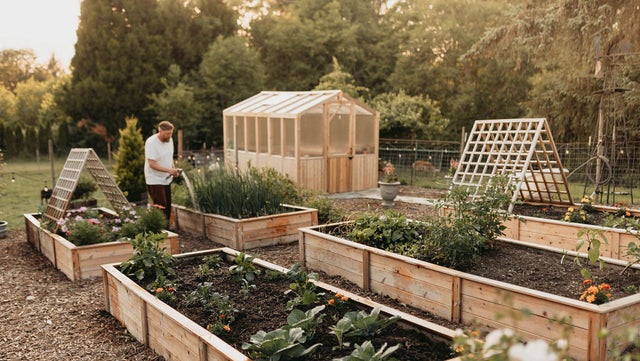
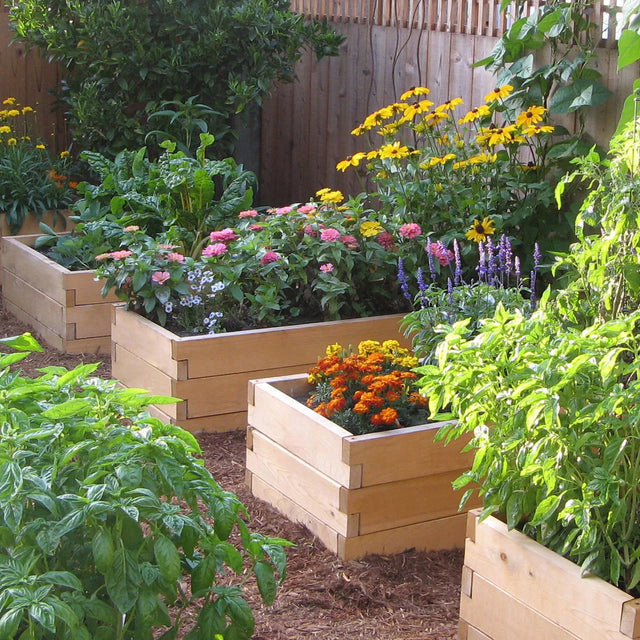
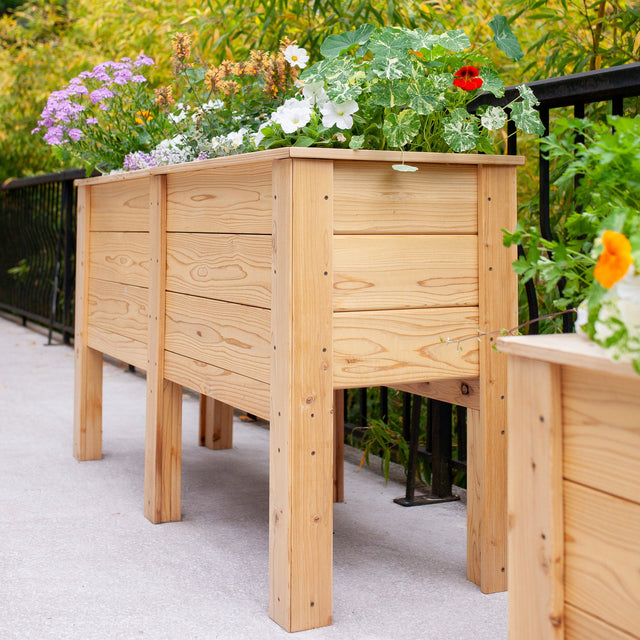
- Use raised garden beds with copper fencing to make it harder for slugs to access plants.
- Keep a pile of rocks at the edge of the garden to encourage garden snakes. A compost pile will encourage beetles, who prey on slugs.
- Remove weeds, boards, ledges, debris, and protective ground cover. Anything that sits on top of the ground becomes a place for slugs. Decks and rock walls can’t be removed, but are good locations for traps.
- A berm built around the perimeter of the garden about three inches wide can serve as a place to sprinkle a line of eggshells and diatomaceous earth.
Irrigation Considerations
- Slugs love moisture, so the drier your garden is, the better. Water at the base of plants, use drip irrigation, and maintain well-drained soil. Space plants well away from each other. Avoid overhead sprinkling.
- An irrigation pond next to the garden will encourage frogs or provide a home for ducks, or both, who will be some of the most effective slug predators.
Plant Considerations
- Potatoes, peas, beans, and celery are all particularly delicious to slugs. If you are going to spend time individually wrapping plants with copper, this is where to focus your energies.
- Many aromatic herbs repel slugs, such as rosemary.
- Marigolds and black-eyed Susan not only look beautiful, but deter slugs when bordering gardens.
- Other plants are resistant or less affected by slugs. These include astilbe, campanula, lobelia, phlox, ranunculus, and viola.