| eartheasy | ||
| home....... ..contact.... ......live.. . ... ..grow. .. . . . .eat.. . .. .. .play.. . . . ..wear.. . . . .give | ||
|
article: The New American Food System, Part 1 By
John Ikerd, PhD, Professor Emeritus, University of Missouri |
||
|
The 20th century was the American Century--as is commonly conceded by historians. During the 20th century, the United States replaced Great Britain as the dominant global economic power, and America’s corporate version of capitalism replaced socialism and competitive capitalism as the world’s dominant economic model. The United States
came from behind to beat the Soviet Union to the moon and take leadership
in space. The United States came from behind to pull ahead of Japan in
electronics and communications technologies. And, America replaced the
whole of Europe as the single dominant global military power. America’s desire for maximum economic growth provided the motive for its unrestrained “corporatist” economy, which later became the model for much of the rest of the world. Research and development supported by economic growth allowed America to take world leadership in space and electronics. And, economic growth made possible the most powerful and dominant military force ever assembled in the history of humanity. A
New Century, A Need for New Direction A return to the “economics
of greed” during the 1980s raised concerns about the growing economic
gap between the “haves and have-nots.” And, when the “economic
bubble” of the 1990s burst at the turn of the century, many more
people began to question whether America’s economic growth is sustainable. We live in an increasingly unhealthy society. The health of any society is reflected in the quality of relationships among its people--within families, communities, and society in general. And, during the latter half of the 20th century, American society has become increasingly disconnected, our relationships have become increasingly unhealthy and dysfunctional, and there is growing evidence that we live in an unsustainable society. Our
Modern Disconnect The fundamental principles of industrialization are specialization of function, standardization of process, and consolidation of control. When workers specialize in doing fewer things, each person can become more efficient in the task they perform, and by working with others, can produce more with less total work than when working separately. By standardizing tasks and standardizing products at each stage of production both workers and products become interchangeable, greatly facilitating the coordination of separate specialized functions. Finally, specialization and standardization simplify the production process, facilitating mechanization and routinization, and making it possible to centralize management functions and consolidate large numbers of workers and functions into large business operations. Economists call the resulting increase in efficiency “economies of scale.” The principles of industrialization are the same in automobile manufacturers, large-scale vegetable processors, retail superstores, or a confinement animal feeding operation. The gains in efficiency from industrialization are achieved by carrying out specialized functions by standardized means under centralized management. Our growing social disconnectedness is not a coincidence of, but a direct consequence of, American industrialization. Americans
Growing Distance from their Food Even those who know
that farmers grow crops and raise livestock, and [that] others process
and package these crops and deliver food to grocery stores and restaurants,
still have little sense of what’s actually involved in this process.
We shouldn’t be surprised that consumers have no real understanding
of food, because they have no sense of connectedness with the land or
with the farmers who tend the soil to bring forth their food. As the economy became
more specialized, merchants such as butchers, bakers, and brewers bought
from producers and sold to consumers, and the farmer/consumer connections
became one-step removed. Then came grocery store owners, who bought from
the butchers, bakers and brewers, and then, consumers were at least two-steps
removed from the farm. First, independent
entrepreneurs were displaced by family corporations, but eventually few
families could accumulate enough capital to compete. As market power and
political power replaced economic efficiency as the primary motivation
for consolidation of control, only the giant publicly held corporations
were able to compete. As the four or five
dominant global food retailers link up with the existing “global
food chain clusters,” they eventually will control all phases of
the global food system from “dirt to the dinner plate,” including
agricultural production.[2] The seeds of dissention
are sown in the gaps of understanding and appreciation that exist among
people. Conflict, frustration, depression, malaise, and many other miseries
in life are but symptoms of our lack of understanding and appreciation
for each other. People may not have associated the symptoms with the cause,
but the cause still matters. And, it matters even more that we consumers
understand our connections with farmers. Many farmers feel that they are forced to value the economic bottom-line above virtually all else, above their neighbors and communities, and sometimes even above their families, because they believe the only thing consumers care about is “cheap food.” Farmers want to be good neighbors and good stewards of the land, but the competitive pressures of a consumer-driven, market economy won’t let them. Instead, the land, the quality of rural life, and ultimately the ability of the earth to support human life will be destroyed, because of the disconnectedness of Americans from the land and from the people who farm it. Our
Self-Abusive Love Affair with Fast Food Food eaten “away from home” now claims a share approaching half of all food purchases in America. And, “fast food” places, such as McDonalds, Kentucky Fried Chicken, Taco Bell, and Pizza Hut, account for nearly half of all food consumed away from home. Schlosser states that “fast food” has triggered the homogenization of our society. Fast food has hastened
the malling of our landscape, widening of the chasm between rich and poor,
fueled an epidemic of obesity, and propelled the juggernaut of American
cultural imperialism abroad. He documents how fast foods have lured us
into choosing diets deficient in nearly everything except calories, supporting
practices deceptive in every aspect, from advertising to flavoring, and
systems that degrade nearly everyone and everything involved in the process. However, the high
dollar-and-cent costs are but the tip of the iceberg. The true costs of
quick food must include the costs of poor health, lost dignity in work,
degraded landscapes, and ethical and moral decay in business matters,
including international trade and investment. They are fighting for their very economic survival. They can’t afford to be too concerned about the well-being of their employees, their suppliers, or their customers; they have to look out for themselves. If their labor costs are too high because of generous salaries and benefits, they can’t compete. If they pay too much to farmers or other suppliers of raw materials, their profit margins will disappear. If they don’t take advantage of the natural human frailties of their customers, their competitors will. If a store or processing plant isn’t profitable in one community, they have to move to another, regardless of the impact on the community. The independent food marketer, like the family farmer, is in a struggle for economic survival. The
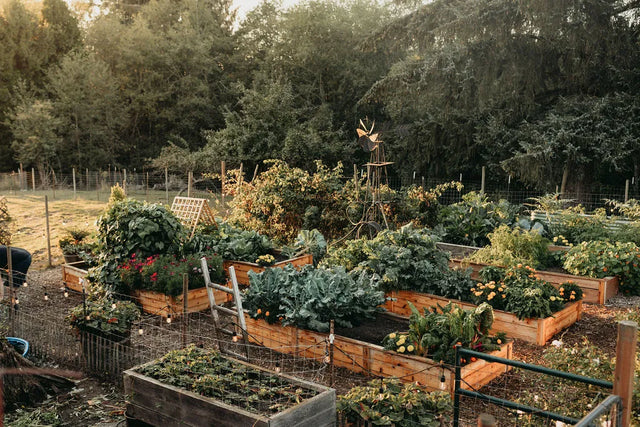
New Farmers Improving the "Disconnected Landscape" Confidence, commitment, and trust have been replaced by guarantees, contracts, and regulations. And when disputes arise concerning market transactions, they are settled in the courts. The reservoirs of personal goodwill from which conciliation and consensus must be drawn have been depleted. Our national disconnectedness
is not a mere “coincidence with” industrialization; instead,
it is a direct “consequence of” industrialization. And equally
significant, we will not become reconnected as a people until we move
beyond industrialization to a fundamentally new and different era of human
progress. These farmers are
trying to learn how to do what no one yet knows how to do, and they are
doing it with little help from anyone other than each other. They are
on a new frontier, and life on any new frontier quite typically is difficult.
But more and more of these new farmers are finding ways to succeed. Continued in Part 2...
De Tocqueville, Alex. Reprinted in 2000. Democracy in America, Bantam Books, New York. Gladwell, Malcolm. 2000. The Tipping Point. Little, Brown and Company, Boston, New York, and London. Kummer, Corby. 2002. The Pleasures of Slow Food. Chronicle Books, San Francisco. Putnam, Robert. 2000. Bowling Alone. Simon and Schuster, New York, London, Toronto, Sydney, and Singapore. Ray, Paul and Sherry Anderson. 2000. The Cultural Creatives. Three Rivers Press, New York. Schlosser, Eric. 2001. Fast Food Nation. Houghton Mifflin Company, Boston and New York. [1] The full text (see website) was prepared for presentation at the Ohio Ecological Food and Farming Association 23rd Annual Conference, Johnstown, Ohio. March 8-9, 2003. [2] For summaries of global food consolidation studies, see articles by Mary Hendrickson, PhD, and William Heffernan, PhD, in Small Farm Today Magazine, April 1999 and July 2001, also available on the Internet at http://nfu.org/images/heffernan.pdf and http://nfu.org/images/heffernan_1999.pdf ~~~~~~~~~~~~~~~~~~~~~~~~~~~~~~~~~~~~~~~~~~~~~~~~~~~~~~~~~~~~~~~~~~~~~ |
||
|
eartheasy |
||