










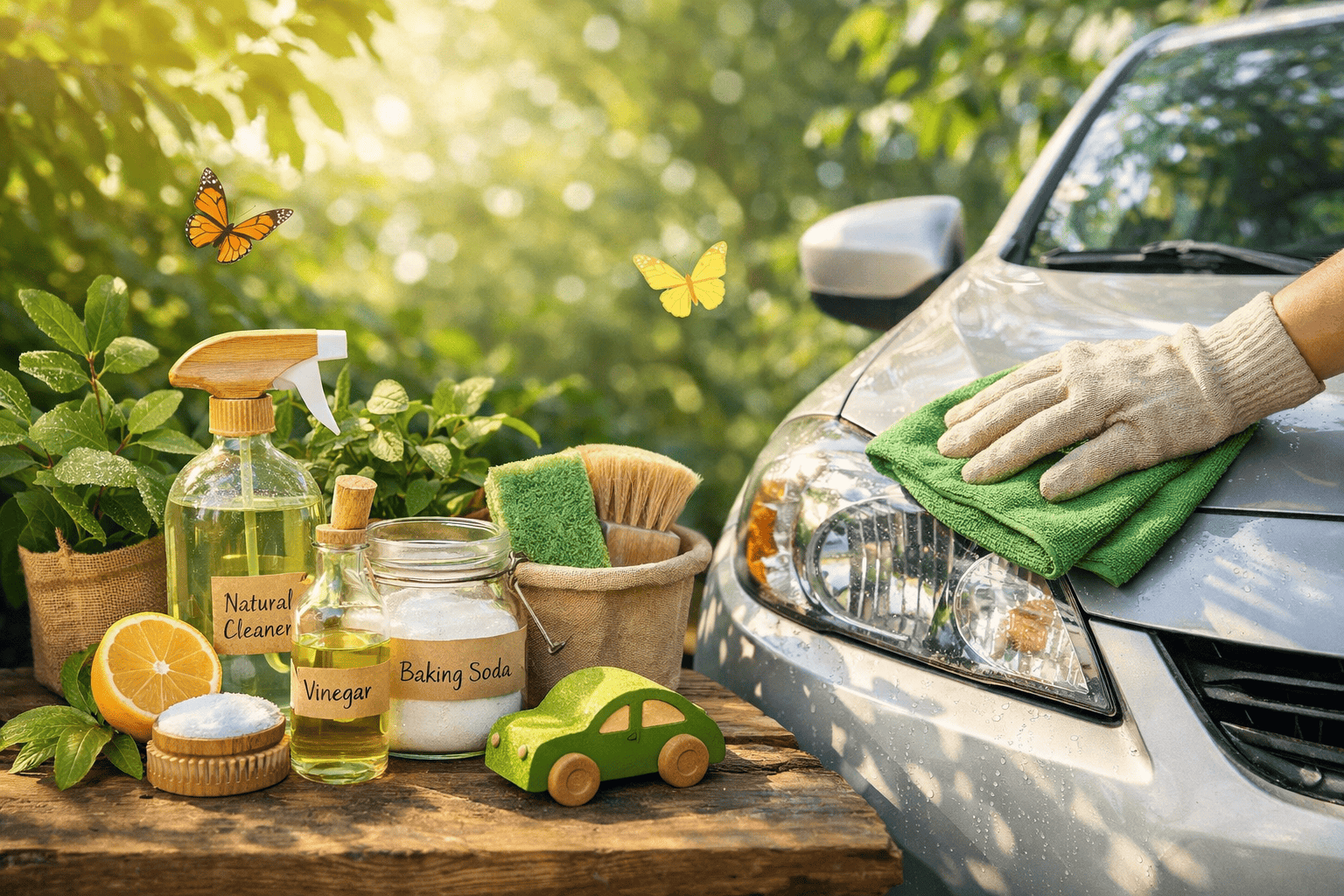
According to the US Bureau of Transit Statistics, there are over 250 million registered passenger vehicles in the U.S. The environmental impact of so many vehicles, including their care and maintenance, is enormous. Manufacturers and suppliers to the auto industry are working to address environmental concerns associated with the industry, but we as consumers can do our part to help lessen the impact of our car use.
And as we show consumer preference towards ‘greener’ technologies and products, manufacturers are further motivated to seek efficiencies and non-toxic product alternatives.
Here are a few of the simplest practices, and less-toxic product alternatives, which can help us green our ride:
Non-toxic windshield washer fluid
Windshield washer fluid is a brightly colored liquid made of methanol, also known as methyl alcohol and wood alcohol. Methanol is extremely toxic – just two tablespoons can be fatal to a child. Although it’s unlikely that child would ingest windshield wiper fluid, think of the impact on the environment as millions of cars routinely squirt this fluid to clear windshields, with the residue spilling onto highways and running into drainage channels. The environmental impact is difficult to gauge, but billions of gallons of windshield wiper fluid are dispersed into the environment every year.
EvergreeN Windshield Washer Fluid is one solution. This product is plant-derived, biodegradable and non-toxic. Several other suppliers are now following suit, with methanol-free formulations which remove sap, bird droppings, bugs, and other grime from windshields.

Green antifreeze
Common antifreeze is made of ethylene glycol, a known toxin. This sweet smelling green liquid is easily spilled when topping up your antifreeze reservoir under the hood. Small puddles on the ground pose an immediate threat to dogs and cats, as well as nearby wildlife, which are attracted to the smell. In most cases, even small doses of ingested antifreeze can be fatal unless spotted and treated quickly.
Fortunately, a less toxic alternative antifreeze formulation is available at most auto supply stores. This non-toxic antifreeze is made of propylene glycol. Propylene glycol is equally effective as ethylene glycol in preventing freezing and overheating of your car’s engine, yet is only one-third as hazardous.
When you replace antifreeze or if you flush your radiator, remember to take the used antifreeze to your local auto repair or radiator shop where it can be recycled.
We switched to propylene glycol several years ago, and now use this antifreeze exclusively in our car and boat. Or mechanic has given it his approval, and we’ve experienced no adverse effects other than a small increase in price compared to ethylene glycol-based antifreeze. (Actually, the cost is about the same but the mix ratio for propylene glycol is 60/40, and for ethylene glycol it is 50/50. The higher cost is somewhat hidden.)

Detergent-free car wash
When you wash your car at home, the residue from soapy detergents is washed down the drain where it can enter and pollute local watersheds. Commercial car washes usually direct waste water to treatment facilities, via the sewer system, which helps reduce the environmental impact. But for people looking for ways to save money, taking the car to a commercial car wash on a regular basis is an expense one can easily forego.
You can effectively wash your car in the driveway using a bucket of water and white vinegar. Put about ½ cup of vinegar into a 5-gallon bucket and then add the water. This will produce a slightly foamy liquid which can be sponged over the car for the initial scrub ‘n wash. You can also apply small amounts of undiluted vinegar to the sponge, full strength, for the front bumper and any other spots which may have bug residue buildup. Rinse with a spray of water from the hose to complete the job.
To minimize streaking or water spots, wash your car on cloudy days or in the mornings or evenings when the car surface is cooler.
Besides sparing the environment from detergent residue, you’ll have saved a considerable amount of water.
VOC-free interior cleaning products
While the ‘new car smell’ is the imprimatur of car interior cleanliness, it is actually the off-gassing of volatile organic compounds (VOCs) we’re smelling. Interior cleaning products for cars commonly contain chemical compounds which do not contribute to a healthy environment for the occupants. And those ubiquitous little ‘tree’ air fresheners are made using phthalates, formaldehyde, and acetone among other ingredients.
A car interior can usually be kept clean without the need for specialty cleaning products. But for stubborn grimy spots, restoring a faded finish, or detailing a car to sell, you can now find “green” cleaning products in auto supply and department stores. EcoTouch, for example, has developed a Dashboard & Trim Cleaner for vinyl, plastic, and leather; a Carpet & Upholstery Cleaner, and a Metal & Chrome Polish, all made using soy and coconut based cleaners.
A common homemade recipe for many cleaning applications is baking soda diluted in water or used full-strength on a sponge for small stubborn spots. Baking soda left open in a small container will also absorb odors. But the key in using any homemade cleaner is to first apply it to a test patch in an area that will be unseen.
For a list of homemade formulas for many cleaning applications, see our page Non-toxic Solutions.